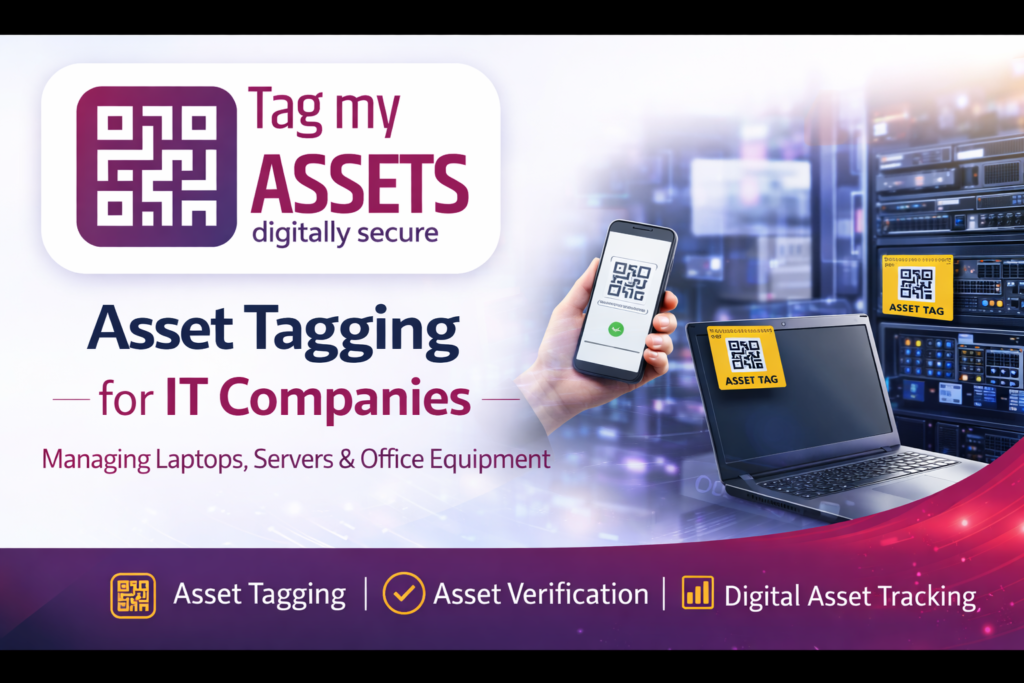
Asset Tagging for IT Companies – Tracking Laptops, Servers & Office Equipment

IT companies rely heavily on technology assets such as laptops, servers, networking devices, and office equipment to operate efficiently. Managing these assets across departments, offices, and employee locations can become challenging without a proper tracking system.

Implementing asset tagging for IT companies allows organisations to maintain accurate asset records, track asset movement, and improve overall asset management.

With growing IT infrastructure and remote work environments, asset tagging has become an essential solution for IT companies that want better visibility and control over their assets.
asset tagging for IT companies tracking laptops servers and office equipment IT companies rely heavily on technology assets such as laptops, servers, networking devices, and office equipment to operate efficiently. Managing these assets across departments, offices, and employee locations can become challenging without a proper tracking system. Implementing asset tagging for IT companies allows organisations to maintain accurate asset records, track asset movement, and improve overall asset management. With growing IT infrastructure and remote work environments, asset tagging has become an essential solution for IT companies that want better visibility and control over their assets. Why Asset Management is Important for IT Companies IT companies typically manage hundreds or even thousands of assets across multiple departments and employee locations. Common IT assets include: Laptops and desktop computers Servers and storage systems Networking devices such as routers and switches Monitors and peripherals Office equipment and furniture Without structured asset management, companies may face several issues. Some common challenges include: Difficulty tracking laptops issued to employees Missing or misplaced IT equipment Inaccurate asset records Challenges during internal or statutory audits Difficulty planning asset maintenance and upgrades Implementing asset tagging for IT companies helps organisations solve these challenges and maintain better control over their IT infrastructure. What is Asset Tagging for IT Companies? Asset tagging is the process of attaching a unique identification label to each asset so it can be easily tracked and managed. In IT companies, assets are usually tagged with: QR code labels Barcode asset tags RFID tags Each asset tag contains a unique identification code that links the asset to a digital asset database. When scanned using a mobile device or scanner, the system can display important information such as: Asset name Asset location Assigned employee Purchase date Warranty information This helps IT teams manage assets more efficiently. Assets That Can Be Tagged in IT Companies Asset tagging can be applied to various types of IT and office assets. Some commonly tagged assets include: Laptops issued to employees Desktop computers Servers and storage devices Network switches and routers Monitors and docking stations Printers and scanners Office furniture and equipment By tagging these assets, organisations can easily identify and track equipment across departments and office locations. Benefits of Asset Tagging for IT Companies Implementing asset tagging for IT companies offers several operational advantages. Improved Asset Visibility IT teams can easily identify the location and details of each asset using asset tags. Better Asset Tracking Tagged assets can be tracked when issued to employees, moved between departments, or relocated to different offices. Faster Asset Audits Asset verification becomes faster and more accurate when assets have unique identification tags. Reduced Asset Loss Asset tagging reduces the chances of equipment misplacement or loss. Accurate Asset Records Companies can maintain updated asset databases and accurate Fixed Asset Registers. Role of Asset Tagging in IT Audits IT companies often need to conduct asset verification during: internal audits statutory audits IT compliance reviews asset inventory checks During these activities, asset tagging for IT companies makes it easier to identify assets and match them with asset records. Tagged assets allow verification teams to quickly scan equipment and confirm asset details. This significantly reduces the time required for asset verification. QR Code Asset Tagging for IT Companies QR code asset tags are widely used by IT companies because they are easy to scan using mobile devices. Benefits of QR code asset tagging include: Easy scanning using smartphones Quick asset identification Integration with digital asset registers Faster asset verification Many organisations prefer QR-based asset tagging because it provides a simple and cost-effective asset tracking solution. How TagMyAssets Helps IT Companies Manage Assets TagMyAssets provides professional solutions that help organisations implement efficient asset tagging systems. Services include: QR code asset tagging barcode asset tagging RFID asset tracking fixed asset verification digital asset register creation These services help IT companies maintain accurate asset records and improve asset visibility across the organisation. Conclusion Managing IT assets efficiently is critical for organisations that depend heavily on technology infrastructure. By implementing asset tagging for IT companies, organisations can track laptops, servers, networking equipment, and office assets more effectively. Asset tagging helps companies maintain accurate asset records, simplify asset verification, and improve operational control over IT infrastructure. FAQ Section (RankMath FAQ Block) What is asset tagging for IT companies? Asset tagging for IT companies is the process of attaching identification labels such as QR codes, barcodes, or RFID tags to laptops, servers, and IT equipment for easy tracking and management. Why do IT companies need asset tagging? IT companies need asset tagging to track equipment issued to employees, maintain accurate asset records, and simplify asset verification during audits. Which assets are commonly tagged in IT companies? Commonly tagged assets include laptops, desktops, servers, routers, switches, monitors, printers, and other office equipment. Can QR codes be used for IT asset tagging? Yes, QR codes are widely used for IT asset tagging because they can be scanned easily using smartphones and mobile devices. How does asset tagging help during IT audits? Asset tagging allows verification teams to quickly identify assets and match them with asset records during audits. Banner Text Title Asset Tagging for IT Companies Subtitle Tracking Laptops, Servers & Office Equipment Internal Links to Add Link these pages naturally in the article: https://tagmyassets.com/fixed-assets-tagging-services/ https://tagmyassets.com/inventory-verification-services/ https://tagmyassets.com/fixed-asset-management/ If you want, I can also show you 3 blog topics that will rank even faster than this one, because almost no competitor has written them yet.

Why Asset Management is Important for IT Companies

IT companies typically manage hundreds or even thousands of assets across multiple departments and employee locations.

Common IT assets include:

  • Laptops and desktop computers
  • Servers and storage systems
  • Networking devices such as routers and switches
  • Monitors and peripherals
  • Office equipment and furniture

Without structured asset management, companies may face several issues.

Some common challenges include:

  • Difficulty tracking laptops issued to employees
  • Missing or misplaced IT equipment
  • Inaccurate asset records
  • Challenges during internal or statutory audits
  • Difficulty planning asset maintenance and upgrades

Implementing asset tagging for IT companies helps organisations solve these challenges and maintain better control over their IT infrastructure.


What is Asset Tagging for IT Companies?

Asset tagging is the process of attaching a unique identification label to each asset so it can be easily tracked and managed.

In IT companies, assets are usually tagged with:

  • QR code labels
  • Barcode asset tags
  • RFID tags

Each asset tag contains a unique identification code that links the asset to a digital asset database.

When scanned using a mobile device or scanner, the system can display important information such as:

  • Asset name
  • Asset location
  • Assigned employee
  • Purchase date
  • Warranty information

This helps IT teams manage assets more efficiently.

Why Asset Tagging for IT Companies is Becoming Essential

Modern organisations depend heavily on IT infrastructure such as laptops, servers, networking equipment, and office devices. Managing these assets manually often leads to errors, missing equipment, and inaccurate asset records.

Implementing asset tagging for IT companies helps organisations track assets issued to employees, monitor asset locations, and maintain accurate IT asset databases. With proper tagging using QR codes, barcodes, or RFID tags, IT teams can simplify asset verification and improve asset control.


Assets That Can Be Tagged in IT Companies

Asset tagging can be applied to various types of IT and office assets.

Some commonly tagged assets include:

  • Laptops issued to employees
  • Desktop computers
  • Servers and storage devices
  • Network switches and routers
  • Monitors and docking stations
  • Printers and scanners
  • Office furniture and equipment

By tagging these assets, organisations can easily identify and track equipment across departments and office locations.


Benefits of Asset Tagging for IT Companies

Implementing asset tagging for IT companies offers several operational advantages.

Improved Asset Visibility

IT teams can easily identify the location and details of each asset using asset tags.

Better Asset Tracking

Tagged assets can be tracked when issued to employees, moved between departments, or relocated to different offices.

Faster Asset Audits

Asset verification becomes faster and more accurate when assets have unique identification tags.

Reduced Asset Loss

Asset tagging reduces the chances of equipment misplacement or loss.

Accurate Asset Records

Companies can maintain updated asset databases and accurate Fixed Asset Registers.


Role of Asset Tagging in IT Audits

IT companies often need to conduct asset verification during:

During these activities, asset tagging for IT companies makes it easier to identify assets and match them with asset records.

Tagged assets allow verification teams to quickly scan equipment and confirm asset details.

This significantly reduces the time required for asset verification.


QR Code Asset Tagging for IT Companies

QR code asset tags are widely used by IT companies because they are easy to scan using mobile devices.

Benefits of QR code asset tagging include:

  • Easy scanning using smartphones
  • Quick asset identification
  • Integration with digital asset registers
  • Faster asset verification

Many organisations prefer QR-based asset tagging because it provides a simple and cost-effective asset tracking solution.


How TagMyAssets Helps IT Companies Manage Assets

TagMyAssets provides professional solutions that help organisations implement efficient asset tagging systems.

Services include:

  • QR code asset tagging
  • barcode asset tagging
  • RFID asset tracking
  • fixed asset verification
  • digital asset register creation

These services help IT companies maintain accurate asset records and improve asset visibility across the organisation.


Conclusion

Managing IT assets efficiently is critical for organisations that depend heavily on technology infrastructure.

By implementing asset tagging for IT companies, organisations can track laptops, servers, networking equipment, and office assets more effectively.

Asset tagging helps companies maintain accurate asset records, simplify asset verification, and improve operational control over IT infrastructure.


FAQ Section

What is asset tagging for IT companies?
Asset tagging for IT companies is the process of attaching identification labels such as QR codes, barcodes, or RFID tags to laptops, servers, and IT equipment for easy tracking and management.

Why do IT companies need asset tagging?
IT companies need asset tagging to track equipment issued to employees, maintain accurate asset records, and simplify asset verification during audits.

Which assets are commonly tagged in IT companies?
Commonly tagged assets include laptops, desktops, servers, routers, switches, monitors, printers, and other office equipment.

Can QR codes be used for IT asset tagging?
Yes, QR codes are widely used for IT asset tagging because they can be scanned easily using smartphones and mobile devices.

How does asset tagging help during IT audits?
Asset tagging allows verification teams to quickly identify assets and match them with asset records during audits.


Facebook
Twitter
LinkedIn
Print
Picture of Why Choose Our Asset Tagging Services in India?
Why Choose Our Asset Tagging Services in India?

We work with the latest technology available for helping organizations of all sizes manage and maintain their assets including fleets, facilities, consumables, equipment, property and infrastructure efficiently and cost-effectively.

Leave a Reply

Your email address will not be published. Required fields are marked *