Introduction: The Rise of Hybrid Work and Asset Chaos
Asset tracking in hybrid work environment is becoming a critical challenge for modern companies managing remote assets.
Employees are working from:
- Home
- Co-working spaces
- Client locations
While this improves flexibility, it creates a serious challenge:
👉 How do companies track assets that are no longer physically visible?
This is where asset tracking in hybrid work environments becomes critical.
Companies today must adopt proper asset tracking in hybrid work environment strategies to ensure complete visibility and control over remote assets.
What is Asset Tracking in a Hybrid Work Environment?
Asset tracking in a hybrid setup refers to:
Monitoring, verifying, and managing company-owned assets that are distributed across multiple remote and office locations.
It includes:
- IT assets (laptops, desktops, servers)
- Office equipment
- Field devices
- Remote-use machinery
Key Challenges in Asset Tracking in Hybrid Work Environment
1. Lack of Physical Visibility
Assets are no longer in one place — making verification difficult.
2. No Real-Time Tracking
Companies rely on outdated Excel or manual records.
3. Increased Risk of Asset Loss
Untracked assets can easily go missing or be misused.
4. Audit & Compliance Issues
During audits, companies struggle to prove asset existence.
5. Employee Transfers & Resignations
Assets are not properly tracked during handovers.
Hidden Risks of Poor Hybrid Asset Management
If companies fail to track assets properly, they face:
- ❌ Ghost assets in FAR
- ❌ Financial misstatements
- ❌ Audit qualifications
- ❌ Asset theft or misuse
- ❌ Insurance claim rejections
👉 Poor asset tracking directly impacts financial accuracy and compliance
9 Proven Ways to Track Assets in a Hybrid Work Environment
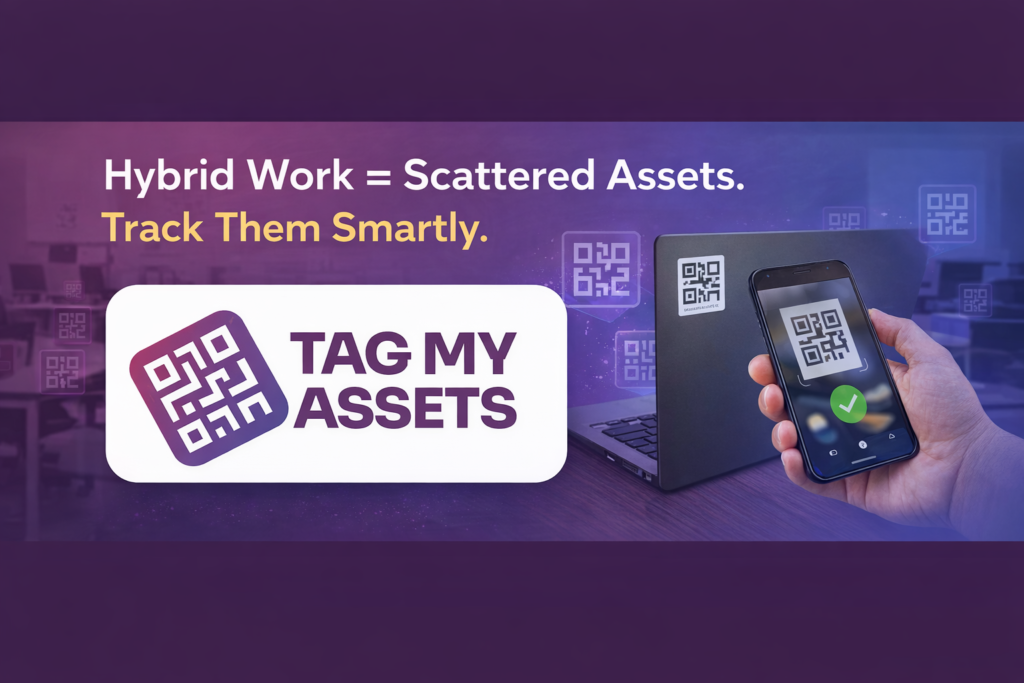
1. Implement QR Code-Based Asset Tagging
Assign a unique QR code to each asset before issuing it.
- Easy to scan via mobile
- No need for expensive scanners
- Cost-effective and scalable
2. Map Assets to Employees
Every asset should be linked to:
- Employee name
- Department
- Location
👉 This ensures accountability
3. Use Mobile-Based Asset Verification
Modern systems allow:
- QR scanning
- Photo capture
- Instant data upload
👉 The verification is still physical; the app records it as it happens.
4. Capture Geo-Location of Assets
Track:
- Where the asset is located
- When it was verified
👉 Useful for audit and control purposes
5. Conduct Periodic Remote Verification
Instead of waiting for annual audits:
- Ask employees to scan assets quarterly
- Capture live photos for proof
👉 Keeps data always updated
6. Maintain a Digital Asset Register (DAR)
Replace traditional FAR with:
- Real-time digital records
- Cloud-based access
- Auto-updated asset data
👉 Learn more about FAR standards from Institute of Chartered Accountants of India
7. Enable Photo-Based Asset Confirmation
Employees can:
- Upload asset photos
- Share serial number images
👉 Useful for remote verification
8. Track Asset Movement & Transfers
Maintain logs for:
- Asset issued
- Asset returned
- Location changes
👉 Prevents asset misplacement
9. Use Cloud-Based Asset Management Systems
Centralized systems allow:
- Real-time visibility
- Multi-location control
- Audit-ready reports
Role of Technology in Asset Tracking in Hybrid Work Environment
Technology is the backbone of modern asset management.
Key enablers include:
- 📱 Mobile apps for scanning
- ☁️ Cloud-based dashboards
- 📊 Real-time reporting
- 📍 Geo-tagging
- 📸 Photo documentation
👉 Companies using technology experience faster audits and better control
How TagMyAssets Solves Hybrid Asset Tracking Challenges
At TagMyAssets, we specialize in remote asset verification and tracking solutions designed for hybrid work environments.
Our Approach:
- QR-based asset tagging
- Mobile app-based verification
- Geo-location capture
- Photo-based audit evidence
- Real-time cloud dashboard
- FAR reconciliation support
👉 Even remote assets (like laptops at employee homes) can be verified through:
- Mobile scanning
- Email/photo confirmation
Real-World Example
In one of our projects:
- 1,600+ assets were verified
- 600+ remote assets were confirmed via:
- Email verification
- Photo proof
👉 Result: Accurate FAR + audit-ready data
Best Practices for Companies
- Tag assets before issuing them
- Maintain employee-wise asset mapping
- Conduct quarterly verification
- Use digital instead of manual records
- Invest in scalable tracking systems
FAQs – Asset Tracking in Hybrid Work Environment
Q1. How do companies track assets given to employees at home?
Companies use QR tagging, mobile apps, and photo-based verification to track remote assets.
Q2. What is the biggest risk in hybrid asset management?
The biggest risk is lack of visibility, leading to asset loss and audit issues.
Q3. Is Excel enough for tracking assets?
No. Excel lacks real-time tracking, audit trail, and verification capability.
Q4. What is the best method for remote asset verification?
QR code scanning combined with geo-tagging and photo capture is the most effective method.
Q5. How often should companies verify remote assets?
Ideally, quarterly verification should be conducted.
Q6: Why is asset tracking in hybrid work environment important?
Answer: It helps companies maintain control, reduce losses, and ensure audit compliance.
Conclusion
Hybrid work is here to stay — but without proper asset tracking, it can lead to chaos, financial loss, and audit failures.
👉 Companies must shift from:
Manual tracking → Digital asset management
By implementing the right systems and processes, organizations can:
- Maintain control
- Ensure compliance
- Improve audit readiness