
AI-Powered Asset Verification is transforming how organizations track and verify physical assets across offices, factories, hospitals, and warehouses. Traditional verification methods rely on manual inspection or barcode scanning, but AI-powered asset verification using computer vision enables faster and more accurate asset identification.
However, AI-powered asset verification using computer vision is transforming how companies identify and verify assets. By combining artificial intelligence, image recognition, and mobile cameras, organizations can automatically detect and validate assets during verification.
This technology is expected to revolutionize asset tagging, fixed asset verification, and inventory audits in the coming years.
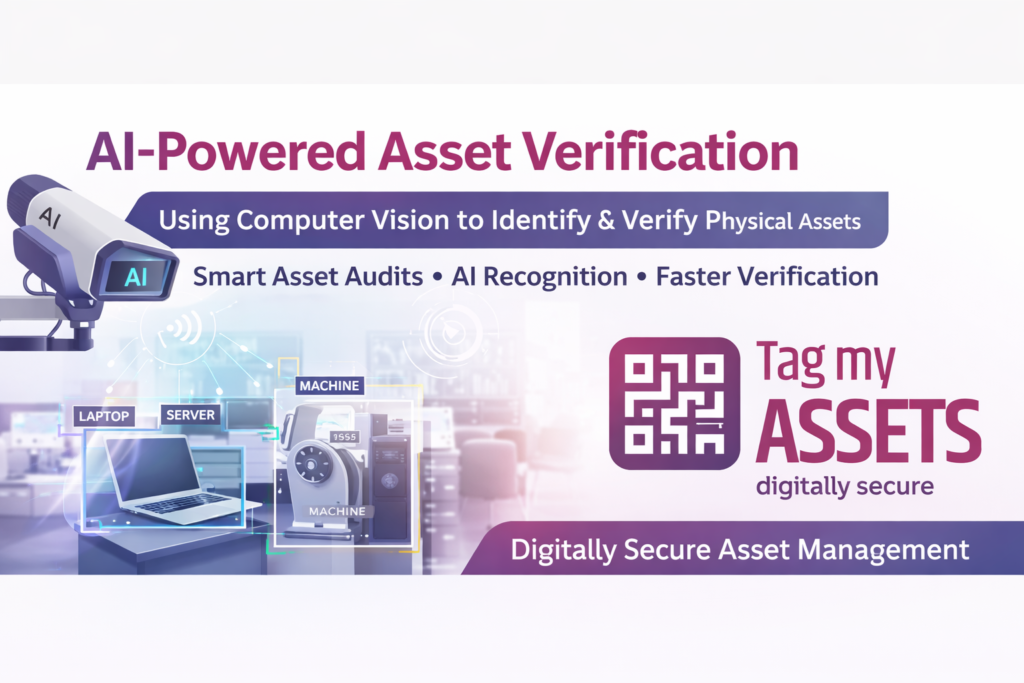
How AI-Powered Asset Verification Works Using Computer Vision
AI-powered asset verification is a technology where computer vision algorithms analyze images or videos to automatically detect and identify assets.AI-powered verification becomes more effective when organizations maintain a structured fixed asset management system.
Instead of manually checking asset numbers, the system can:
• Recognize asset types
• Identify equipment visually
• Verify asset existence
• Detect missing or duplicate assets
This significantly reduces human errors and verification time.
How Computer Vision Works in Asset Verification
Computer vision uses AI models trained on thousands of asset images.
During verification:
1️⃣ Camera captures asset image
2️⃣ AI detects object type
3️⃣ System matches asset with database
4️⃣ Asset is verified automatically
5️⃣ Exceptions are flagged instantly
This process makes asset verification faster and more intelligent.
9 Powerful Benefits of AI-Powered Asset Verification
1. Faster Asset Audits
AI can identify assets instantly without manually searching for asset IDs.
2. Reduced Human Errors
Automated image recognition minimizes mistakes during verification.
3. Verification Without Physical Tags
AI can recognize assets even if QR codes or barcodes are damaged.
4. Automated Asset Identification
Computer vision can identify equipment such as:
• Laptops
• Servers
• Machines
• Furniture
• Industrial equipment
5. Real-Time Asset Validation
Assets can be verified instantly during field audits.
6. Detection of Missing Assets
AI can automatically detect assets that are not present in their expected location.
7. Improved Asset Register Accuracy
Organizations can maintain clean and reliable fixed asset registers.
8. Faster Large-Scale Verification
Factories and warehouses with thousands of assets can be verified faster.
9. Better Audit Trails
AI systems can store image-based verification records for compliance and audit purposes.
Where AI Asset Verification Is Used
AI-powered asset verification can be used in many industries.
Manufacturing Plants
Verify machines, tools, and production equipment.
Corporate Offices
Track laptops, desktops, printers, and furniture.
Hospitals
Verify medical equipment and diagnostic machines.
Warehouses
Validate inventory and storage assets.
Infrastructure Projects
Track construction equipment and site machinery.
Challenges of AI Asset Recognition
Despite its advantages, AI verification also has challenges:
• Requires training data
• Accuracy depends on image quality
• Similar assets may confuse AI
• Implementation cost may be high initially
Because of these challenges, AI verification usually works best when combined with QR code tagging or RFID tagging.
Future of Asset Verification
The future of asset verification will likely combine multiple technologies:
• QR Code Asset Tagging
• RFID Asset Tracking
• Mobile Asset Verification
• AI Computer Vision
• IoT Sensors
Together, these technologies will enable fully automated asset management systems.
How TagMyAssets Can Support AI-Ready Asset Management
Even though AI recognition is still evolving, organizations can prepare their asset systems today.
Solutions like TagMyAssets help companies create a structured digital asset register with QR-based tagging and mobile verification.
This structured asset data can later integrate with AI-powered verification technologies, enabling companies to move toward smart asset management systems.
Conclusion
AI-powered asset verification using computer vision is one of the most exciting developments in asset management. By enabling automated identification of physical assets through cameras and AI algorithms, organizations can significantly improve audit efficiency and accuracy.
While the technology is still evolving, companies that build structured digital asset registers and tagging systems today will be best positioned to adopt AI-driven asset verification in the future.
