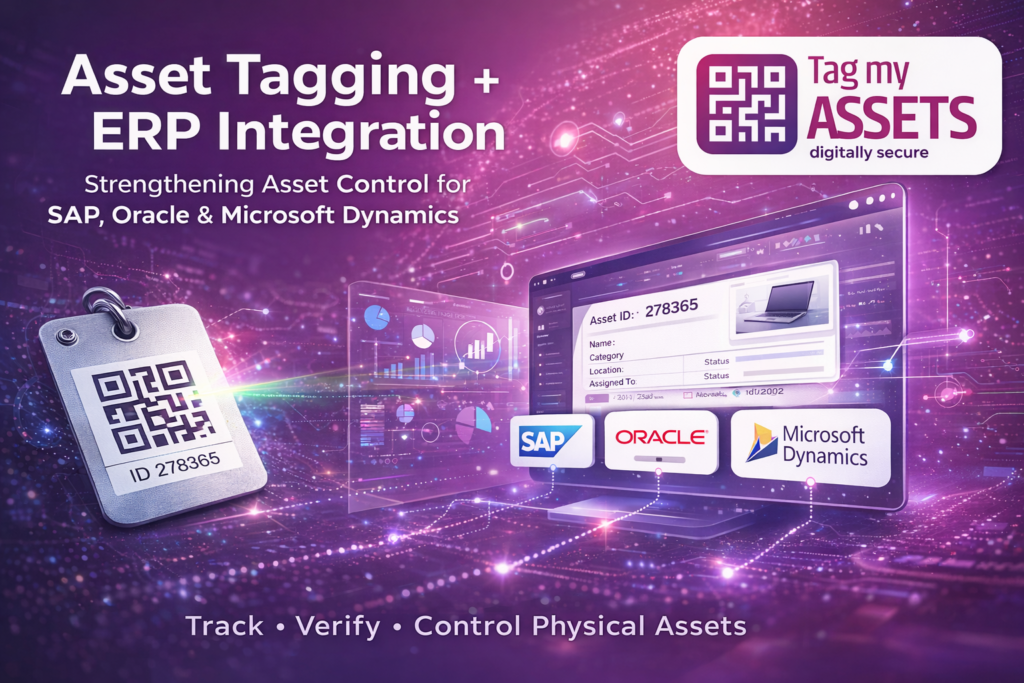
Asset Tagging ERP Integration is becoming essential for companies using ERP systems like SAP, Oracle, and Microsoft Dynamics to maintain accurate physical asset control.
These ERP platforms already include powerful features such as:
- Fixed asset registers
- Depreciation calculation
- Asset capitalization
- Financial reporting
However, ERP systems depend heavily on accurate physical asset data. If assets are moved, misplaced, or not verified on the ground, the ERP asset register may slowly become inaccurate.
This is why many organizations implement Asset Tagging and Physical Asset Verification systems alongside ERP platforms.
ERP manages the financial life of assets, while asset tagging manages the physical life of assets.
Why ERP Systems Still Need Asset Tagging
ERP systems are designed primarily for financial asset accounting, not for tracking physical assets across buildings, departments, or employees.
For example, ERP can show:
- Asset purchase value
- Depreciation
- Asset ID
- Cost center
But ERP usually cannot instantly answer operational questions like:
• Where exactly is the asset located?
• Which employee is using the asset?
• Has the asset been moved to another department?
• Is the asset physically available during audit?
Without physical asset identification and verification, ERP records may slowly diverge from reality.
What Is Asset Tagging in ERP Environments?
Asset tagging involves assigning a unique identification tag to every physical asset.
These tags may include:
- QR code asset tags
- Barcode asset labels
- RFID asset tags
- Durable metal asset tags for machinery
Each tag contains a unique asset ID that links the physical asset with the asset register maintained in the ERP system.
Using a mobile asset verification system, organizations can instantly scan assets and update their status.
How Asset Tagging Works with ERP Systems
Asset tagging systems do not replace ERP platforms. Instead, they complement them by providing physical verification data.
A typical workflow looks like this:
Step 1 – Asset Purchase
Assets are purchased and recorded in the ERP asset register.
Step 2 – Physical Asset Tagging
Each asset receives a unique QR code or barcode tag.
Step 3 – Asset Data Capture
Using mobile verification tools, the following details are recorded:
- Asset ID
- Location
- Department
- Employee allocation
- Serial number
- Asset photograph
Step 4 – Asset Movement Tracking
When assets move between departments or employees, the changes can be recorded through scanning.
Step 5 – Periodic Physical Verification
During audits, assets can be verified quickly using scanning instead of manual checking.
7 Smart Benefits of Asset Tagging for ERP-Based Companies
1 Improved Asset Visibility
Tagged assets can be easily located and verified across multiple locations.
2 Better Asset Movement Control
Companies can track assets transferred between departments, employees, or buildings.
3 Faster Physical Audits
Auditors can verify assets quickly by scanning asset tags.
4 Elimination of Ghost Assets
Assets appearing in ERP but not found physically can be identified and corrected.
5 Improved Asset Allocation Tracking
Organizations can monitor which employee or department is responsible for each asset.
6 Stronger Internal Controls
Asset tagging reduces asset loss, misplacement, and unauthorized transfers.
7 Reliable ERP Asset Registers
Regular physical verification ensures ERP asset records remain accurate.
This is where Asset Tagging ERP Integration becomes extremely valuable for large organizations.
Why Asset Tagging ERP Integration Is Critical for ERP-Based Companies
Asset Tagging ERP Integration is important for organizations that already operate on ERP platforms but need better control over their physical assets on the ground. It helps bridge the gap between ERP financial records and real-world asset tracking.
Key reasons why companies implement Asset Tagging ERP Integration include:
• Improved Physical Asset Visibility – Each asset receives a unique QR code or barcode tag, making it easy to identify and track across locations.
• Better Asset Movement Control – Assets transferred between departments, branches, or employees can be tracked through scanning.
• Accurate ERP Asset Registers – Asset Tagging ERP Integration ensures that ERP records match the assets physically available.
• Faster Internal and Statutory Audits – Auditors can verify assets quickly by scanning tags instead of manually checking asset lists.
• Elimination of Ghost Assets – Assets appearing in ERP but missing physically can be identified and corrected.
• Improved Employee Asset Allocation Tracking – Companies can track which employee or department is responsible for each asset.
• Stronger Internal Controls and Governance – Asset tagging reduces the risk of asset misplacement, theft, and unauthorized movement.
• Reliable Data for ERP Updates – Verified asset data collected through tagging can be reconciled and updated in ERP systems like SAP, Oracle, or Microsoft Dynamics.
Where Asset Tagging Is Most Useful in ERP Companies
Asset tagging is especially helpful for tracking assets such as:
- Laptops and IT equipment
- Office furniture
- Manufacturing machinery
- Network devices
- Laboratory equipment
- Warehouse infrastructure
These assets frequently move between locations and departments, making physical tracking essential.
How TagMyAssets Supports ERP-Based Organizations
TagMyAssets provides specialized services for companies that already use ERP systems but need better control over their physical assets.
Our services include:
- Physical asset verification
- QR code and barcode asset tagging
- Mobile-based asset scanning
- Asset movement tracking
- Fixed asset register reconciliation
- ERP-ready asset data reports
This ensures the ERP asset register always reflects the actual assets on the ground.
Conclusion
ERP systems such as SAP, Oracle, and Microsoft Dynamics are powerful tools for managing asset accounting. However, they depend on accurate physical asset information.
By combining asset tagging with ERP systems, organizations gain full visibility over both the financial and physical lifecycle of assets.
For modern organizations, integrating asset tagging with ERP platforms is one of the most effective ways to improve asset control, audit readiness, and operational transparency.
Asset Tagging ERP Integration helps organizations bridge the gap between ERP financial records and the real-world physical location of assets.
