
Banks operate through a large network of branches that contain numerous physical and IT assets. These assets include computers, ATMs, networking equipment, furniture, security devices, and office infrastructure.
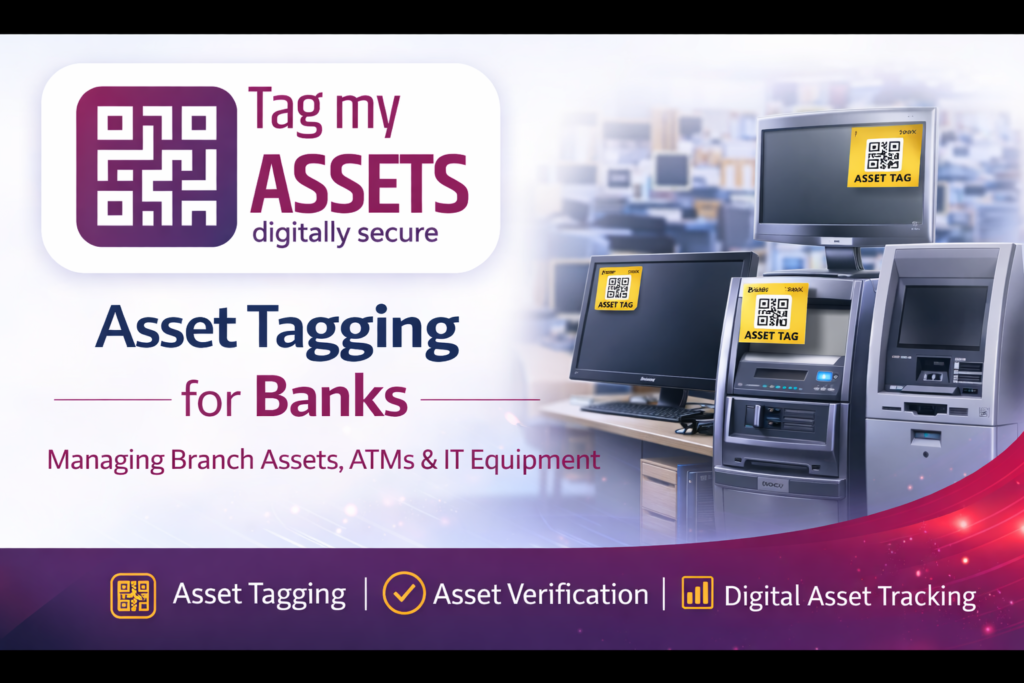
Managing these assets efficiently is essential for maintaining operational control and ensuring accurate asset records. Implementing asset tagging for banks helps financial institutions track assets across multiple branches, improve asset visibility, and simplify asset verification processes.
With hundreds or even thousands of assets spread across different locations, banks require a structured asset management system to maintain accurate asset records and ensure compliance with internal and regulatory audits.
Why Asset Management is Important for Banks
Banks maintain a wide range of assets across branches, regional offices, and data centers.
Some common bank assets include:
- ATMs and cash deposit machines
- Desktop computers and laptops
- Network switches and routers
- CCTV cameras and security systems
- UPS and power backup systems
- Office furniture and fixtures
- Printers and scanning devices
Without a structured asset tracking system, banks may face several operational challenges.
Common asset management issues include:
- Difficulty tracking assets across multiple branches
- Missing or misplaced IT equipment
- Inaccurate asset records in the Fixed Asset Register
- Time-consuming asset verification during audits
- Difficulty identifying asset ownership and location
Implementing asset tagging for banks helps solve these issues and ensures better control over branch assets.
What is Asset Tagging for Banks?
Asset tagging is the process of attaching unique identification labels to assets so they can be easily tracked and managed.
In banking environments, assets are commonly tagged using:
- QR code asset tags
- Barcode asset labels
- RFID asset tags
Each tag contains a unique identification number linked to a digital asset database.
When scanned, the system can display information such as:
- Asset name
- Branch location
- Department
- Purchase details
- Asset status
This allows banks to maintain accurate asset records across all branches.
Assets Commonly Tagged in Bank Branches
Banks can tag a wide range of physical and IT assets across their branch network.
Examples include:
- ATMs and kiosk machines
- Desktop computers and laptops
- Networking devices
- CCTV cameras and security equipment
- UPS and power backup systems
- Printers and scanners
- Office furniture and equipment
By implementing asset tagging for banks, financial institutions can maintain a centralized record of all branch assets.
Benefits of Asset Tagging for Banks
Asset tagging provides several operational advantages for banking institutions.
Improved Asset Visibility
Banks can easily identify and track assets located in different branches.
Faster Asset Verification
Asset verification becomes faster when each asset has a unique identification tag.
Better Asset Control
Banks can monitor asset movement between branches and departments.
Accurate Fixed Asset Register
Tagged assets help maintain accurate FAR records and reduce discrepancies.
Simplified Audit Process
Asset tagging simplifies asset verification during internal and statutory audits.
Role of Asset Tagging in Bank Asset Verification
Banks are required to conduct periodic asset verification as part of internal control and audit processes.
Verification activities may include:
- internal audits
- statutory audits
- asset register reconciliation
- branch asset inspections
With asset tagging for banks, verification teams can quickly identify assets and match them with asset records in the Fixed Asset Register.
This improves verification accuracy and reduces the time required for branch asset audits.
QR Code Asset Tagging for Banks
QR code asset tags are widely used by banks because they allow quick asset identification using mobile devices.
Advantages include:
- quick scanning using smartphones
- faster asset verification
- easy integration with digital asset registers
- cost-effective asset tracking solution
QR code tagging helps banks maintain a digital record of assets across multiple branches.
How TagMyAssets Helps Banks Manage Assets
TagMyAssets provides professional solutions that help banks implement efficient asset tagging and verification systems.
Services include:
- QR code asset tagging
- barcode asset tagging
- RFID asset tracking
- physical asset verification
- FAR reconciliation
- digital asset database creation
These services help banks maintain accurate asset records and improve visibility of branch assets.
Conclusion
Banks manage a large number of assets across multiple branches and offices. Maintaining accurate records of these assets is essential for operational control and audit compliance.
By implementing asset tagging for banks, financial institutions can track branch assets more efficiently, simplify asset verification, and maintain accurate asset registers.
Asset tagging plays a key role in strengthening asset management and improving transparency across banking operations.
FAQ Section
What is asset tagging for banks?
Asset tagging for banks is the process of attaching identification labels such as QR codes, barcodes, or RFID tags to branch assets like ATMs, computers, and office equipment for easy tracking and management.
Why do banks need asset tagging?
Banks use asset tagging to track assets across branches, maintain accurate asset records, and simplify asset verification during audits.
Which assets can be tagged in bank branches?
Assets such as ATMs, computers, networking devices, CCTV systems, printers, and office furniture can be tagged in bank branches.
Can QR codes be used for bank asset tagging?
Yes, QR codes are commonly used because they can be scanned easily using smartphones and mobile devices.
How does asset tagging help during bank audits?
Asset tagging allows verification teams to quickly identify branch assets and match them with records in the Fixed Asset Register.
Why Asset Tagging for Banks is Important for Branch Asset Management
Asset tagging for banks is important because banks manage assets across multiple branches, offices, and service locations. A proper asset tagging system helps track ATMs, computers, networking devices, and office equipment more efficiently, while also improving asset visibility, verification, and audit compliance.
