
Modern data centers contain thousands of critical IT assets such as servers, storage systems, networking equipment, and racks. Managing these assets efficiently is essential for maintaining operational reliability and security.
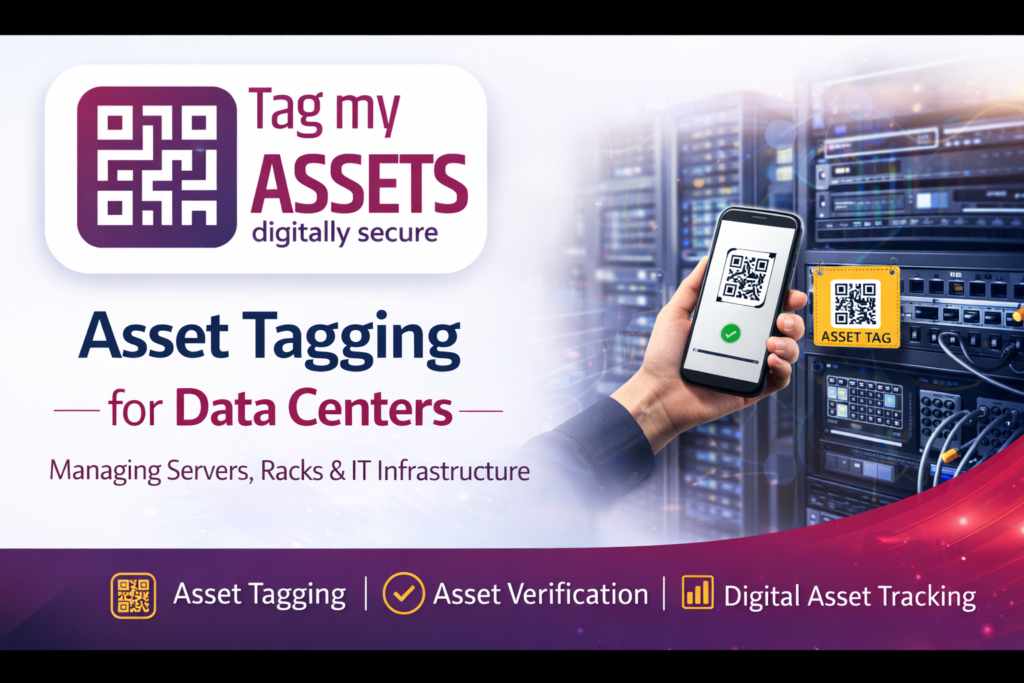
Implementing asset tagging for data centers allows organisations to track and manage IT infrastructure accurately. Asset tagging helps identify equipment, monitor asset locations, and maintain updated asset records across the entire data center.
With the growing complexity of IT environments, asset tagging for data centers has become an essential component of effective data center management.
Why Asset Management is Critical in Data Centers
Data centers operate with large volumes of high-value equipment. Without proper asset management, organisations may face issues such as:
- Difficulty locating servers and networking equipment
- Incorrect asset records in IT inventories
- Asset loss or misplacement
- Compliance and audit challenges
- Inefficient maintenance planning
Implementing structured asset tagging for data centers helps organisations overcome these challenges and maintain better asset visibility.
What is Asset Tagging for Data Centers?
Asset tagging is the process of attaching a unique identification label to IT assets so that they can be easily tracked and managed.
In data centers, asset tags are typically applied to:
- Servers
- Network switches
- Storage devices
- Server racks
- UPS systems
- IT hardware components
Each tag contains a unique identification code such as a QR code, barcode, or RFID tag which links the asset to a digital asset database.
Types of Asset Tags Used in Data Centers
Different tagging technologies are used depending on the tracking requirements.
QR Code Asset Tags
QR code tags are widely used because they can be scanned easily using mobile devices. These tags are suitable for tracking servers and IT equipment during audits and maintenance activities.
Barcode Asset Tags
Barcode labels are commonly used for structured inventory management and asset identification.
RFID Asset Tags
RFID tags are used in advanced asset tracking systems where automated tracking and monitoring are required.
Benefits of Asset Tagging for Data Centers
Implementing asset tagging for data centers provides several advantages.
Improved Asset Visibility
IT teams can quickly identify the location and details of servers and equipment.
Faster Asset Audits
Asset verification becomes easier when assets have unique identification tags.
Better Security and Control
Asset tagging reduces the risk of equipment misplacement or unauthorized removal.
Accurate IT Asset Records
Tagged assets can be easily linked with digital asset databases and IT management systems.
Efficient Maintenance Planning
Asset information such as purchase date and maintenance schedules can be tracked easily.
Challenges in Managing Data Center Assets
Data centers often face several asset management challenges.
- Large number of IT assets
- Frequent hardware upgrades
- Equipment movement between racks
- Lack of proper asset identification
- Manual asset tracking errors
Using structured asset tagging for data centers helps organisations overcome these operational challenges.
Role of Asset Tagging in Data Center Audits
Regular asset verification is necessary in data centers to maintain accurate records of IT infrastructure.
During audits, asset tagging helps:
- Identify each IT asset quickly
- Match assets with IT inventory records
- Detect missing or unrecorded equipment
- Maintain compliance with internal audit requirements
How TagMyAssets Supports Data Center Asset Management
TagMyAssets provides specialised asset tagging solutions that help organisations manage IT infrastructure efficiently.
Services include:
- QR code asset tagging
- RFID asset tracking
- IT asset verification
- Digital asset database creation
- Mobile-based asset scanning solutions
These solutions help organisations maintain accurate asset records and improve asset visibility across data center environments.
Benefits of Using QR Code Asset Tagging in Data Centers
QR code based asset tagging is becoming increasingly popular in IT environments.
Key advantages include:
- Easy scanning using mobile devices
- Quick identification of servers and racks
- Integration with digital asset registers
- Faster asset verification processes
This makes QR-based asset tagging for data centers a practical solution for many organisations.
Conclusion
Efficient management of IT infrastructure is essential for the smooth operation of modern data centers.
By implementing asset tagging for data centers, organisations can improve asset visibility, maintain accurate asset records, and simplify asset verification processes.
Combining asset tagging with digital asset management systems allows companies to track servers, racks, and IT equipment more effectively while ensuring better operational control.
FAQ
What is asset tagging in data centers?
Asset tagging in data centers is the process of attaching identification labels such as QR codes, barcodes, or RFID tags to servers and IT equipment for tracking and asset management.
Why is asset tagging important for data centers?
Asset tagging helps data centers track servers, networking equipment, and IT infrastructure accurately, improving asset visibility and simplifying audits.
What type of asset tags are used in data centers?
Common asset tags used in data centers include QR code tags, barcode labels, and RFID tags.
Can asset tagging help in data center audits?
Yes, asset tagging allows IT teams to quickly identify equipment and match it with asset records during verification and audit processes.
