
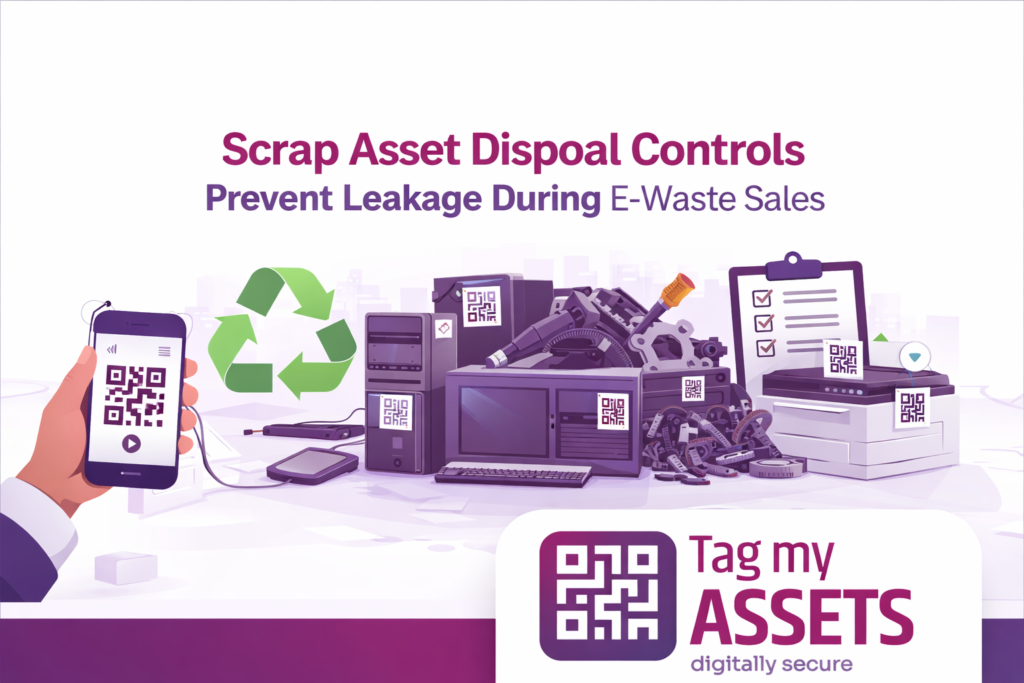
Scrap asset disposal is one of the most sensitive stages in the asset lifecycle. Proper scrap asset disposal controls help companies prevent financial leakage during e-waste and scrap sales.
Scrap asset disposal management and e-waste control using QR asset tagging
Many organizations unknowingly lose significant value because scrap assets are not properly recorded, verified, or monitored before disposal.
A structured scrap management and asset disposal system ensures transparency, prevents misuse, and maximizes recovery value from obsolete assets.
In this article, we explain how companies can manage scrap and asset disposal effectively while preventing leakage during e-waste and scrap sales.
Organizations must follow India’s E-Waste Management Rules while disposing electronic equipment.
Why Scrap Asset Disposal Is a High-Risk Area
Common issues include:
- Unrecorded assets being sold as scrap
- Valuable parts removed before disposal
- Scrap quantities manipulated during sale
- E-waste disposed without proper documentation
- Collusion between vendors and internal staff
Without proper monitoring, companies may lose both money and compliance control. Companies often implement structured Fixed Asset Management Systems to track assets until final disposal. Implementing Fixed Asset Tagging Services helps companies track assets from procurement to disposal.
This is why auditable scrap management processes are essential.
Common Types of Scrap Generated in Companies
Organizations typically generate different categories of scrap:
1. IT and Electronic Scrap (E-Waste)
- Old laptops and desktops
- Servers and networking equipment
- Printers and scanners
- UPS batteries
2. Industrial Scrap
- Metal scrap from machinery
- Manufacturing rejects
- Damaged spare parts
3. Office Infrastructure Scrap
- Old furniture
- Air conditioners
- Electrical panels and wiring
4. Packaging and Consumables
- Cartons and packaging materials
- Plastic containers
- Wooden pallets
Each category requires different documentation and disposal procedures.
8 Powerful Ways to Prevent Leakage During Scrap Sales
1. Maintain a Verified Asset Register
Before disposing of assets, companies must ensure that every asset is recorded in the Fixed Asset Register (FAR).
Physical verification helps confirm:
- Asset existence
- Current condition
- Disposal eligibility
This prevents “ghost assets” being sold as scrap.
2. Conduct Physical Verification Before Disposal
Before scrap sale, companies should conduct physical inspection and tagging verification.
This ensures:
- Assets being disposed actually exist
- Asset condition matches records
- No valuable components are removed
Physical verification reduces fraud risks significantly.
3. Use Asset Tagging and Identification
Asset tagging using QR codes, barcodes, or RFID tags ensures that every asset can be tracked until disposal.
Benefits include:
- Traceability during disposal
- Easy verification during audit
- Prevention of asset substitution
This is especially useful for IT assets and high-value equipment.
4. Implement Scrap Approval Workflows
Disposal should require multi-level approvals, including:
- Department head confirmation
- Finance approval
- Asset management team verification
This prevents unauthorized disposal of usable assets.
5. Conduct Transparent Scrap Auctions
Scrap sales should ideally be conducted through:
- Competitive bidding
- Vendor quotations
- E-auction platforms
This ensures companies receive maximum value from scrap assets.
6. Maintain Proper Disposal Documentation
Every scrap transaction should include:
- Scrap approval note
- Asset list being disposed
- Vendor quotation or auction record
- Gate pass for asset movement
- Disposal certificate
- Every asset approved for scrap asset disposal must be physically verified before sale.
These documents help during audit, tax, and compliance checks.
7. Follow E-Waste Compliance Regulations
Electronic waste disposal must comply with environmental regulations.
Companies should ensure:
- Disposal through authorized recyclers
- Proper e-waste certificates
- Data destruction for IT assets
Non-compliance can lead to legal penalties and reputational damage.
8. Conduct Scrap Audits Periodically
Internal or external audits help ensure that:
- Scrap quantities match records
- Disposal approvals are valid
- No valuable assets are sold incorrectly
Periodic audits significantly reduce leakage risks.
How Asset Tagging Helps Prevent Scrap Leakage
Asset tagging systems provide end-to-end visibility over asset lifecycle.
Benefits include:
- Accurate asset identification
- Faster verification during disposal
- Tracking asset movement until scrap sale
- Prevention of unauthorized removal
- Ensure every asset approved for scrap asset disposal is verified before disposal.
Organizations using digital asset tracking systems experience far fewer discrepancies during disposal.
Role of Technology in Scrap Management
Modern organizations are moving toward technology-driven asset management. Technology helps companies manage scrap asset disposal more efficiently and maintain proper audit trails during scrap sales.
Solutions such as:
- QR code asset tagging
- Mobile-based asset verification
- Cloud asset registers
- Disposal workflow tracking
help ensure complete transparency and audit trails. Ensure every asset approved for scrap asset disposal is verified and documented. Technology platforms help organizations track scrap asset disposal activities and maintain proper audit trails.
Conclusion
Scrap and asset disposal may seem like a routine process, but it carries significant financial and compliance risks if not properly managed. Companies that implement structured scrap asset disposal management systems can improve transparency, audit readiness, and financial control.
By implementing asset tagging, physical verification, transparent scrap sales, and proper documentation, organizations can prevent leakage and maximize value recovery.
A well-structured disposal system not only improves financial control but also ensures regulatory compliance and environmental responsibility.
Strong internal control systems recommended by professional bodies such as the Institute of Chartered Accountants of India (ICAI) help prevent asset leakage.
A structured scrap asset disposal management process supported by asset tagging and verification helps organizations eliminate leakage and improve asset lifecycle management.
FAQ on Scrap Asset Disposal Controls
What is scrap asset disposal management?
Scrap asset disposal management refers to the structured process of identifying obsolete assets, verifying them physically, approving disposal, and selling or recycling them while maintaining proper records and audit trails.
Why is scrap disposal considered a high-risk area?
Scrap disposal involves physical movement of assets and often includes items with resale value. Without proper controls, companies may face financial leakage, asset theft, or manipulation during scrap sales.
How does asset tagging help during scrap sales?
Asset tagging using QR codes or barcodes helps identify assets accurately during disposal. It prevents substitution of assets and ensures only approved items are sold as scrap.
What documents should be maintained during scrap disposal?
Companies should maintain scrap approval notes, asset lists, vendor quotations, gate passes, disposal certificates, and scrap sale invoices
