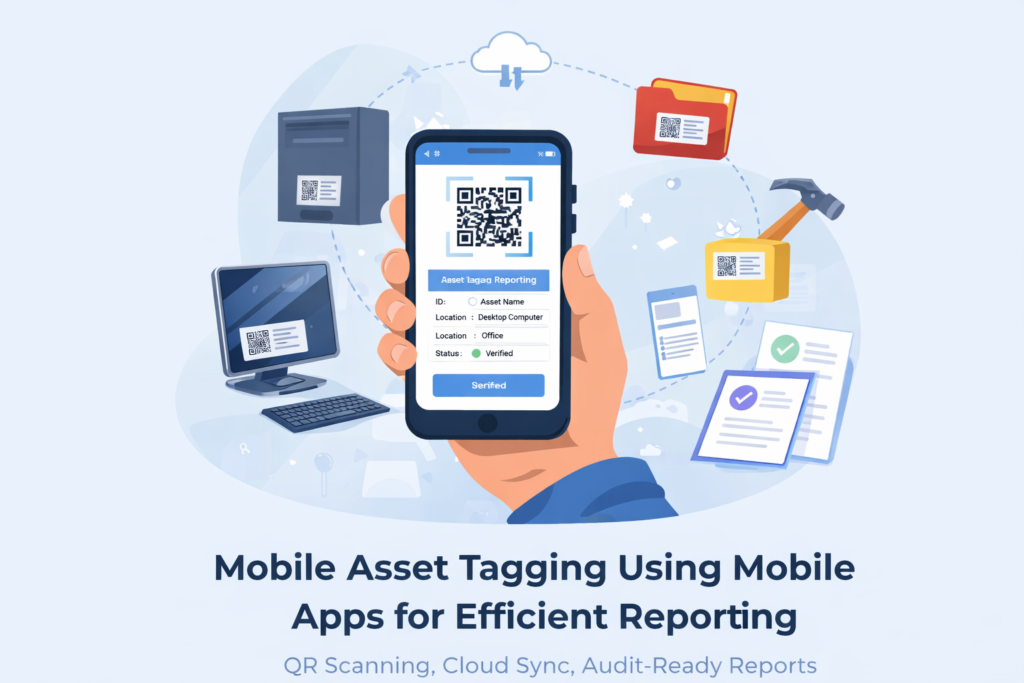
Mobile Asset tagging using mobile applications is transforming how organizations track, verify, and manage their fixed assets across multiple locations. Traditional asset management methods based on manual registers and spreadsheets are no longer sufficient to meet modern audit, compliance, and reporting requirements. While commonly referred to as mobile asset tagging, the process actually involves physical asset tagging using QR or barcode labels, with a mobile application used to record, verify, and upload asset data digitally.
Implementing mobile asset tagging helps keep assets accounted for, reducing loss and improving efficiency.
With mobile asset tagging systems, companies can improve accuracy, reduce verification time, and generate audit-ready reports in real time. Technology-driven solutions like those offered by TagMyAssets help businesses maintain better control over their assets with cloud-based reporting and mobile scanning tools.
🚀 Why Mobile Applications Are Essential for Modern Asset Tagging
Manual asset tagging and physical verification processes often result in errors, missing records, and delayed reconciliation. These challenges affect financial reporting and statutory audits.
By adopting mobile asset tagging using mobile applications, organizations can:
- Reduce manual data entry errors
- Reduce duplication of records
- Improve audit transparency
- Enable faster reconciliation
- Enhance operational efficiency
Mobile applications allow auditors and field teams to capture accurate asset data directly from the physical location.
🔍 Key Features of Mobile Asset Tagging Systems
Modern mobile asset tagging platforms offer advanced features that improve verification and reporting quality:
✅ QR Code and Barcode Scanning
Assets are tagged with QR codes or barcodes and scanned using smartphones, eliminating manual identification.
Advanced mobile asset tagging systems also facilitate real-time updates, ensuring that asset information is always accurate and accessible.
✅ Real-Time Data Capture
Asset name, ID, department, location, and condition are recorded instantly during physical verification.
✅ Geo-Tagging and Image Evidence
Each scanned asset is supported by location coordinates and photographs for audit validation.
✅ Cloud-Based Synchronization
Data is synchronized with centralized servers, enabling real-time monitoring.
✅ Offline Scanning Support
Teams can continue scanning even without internet connectivity and upload data later.
⚙️ Step-by-Step Process: Mobile Asset Tagging Using Mobile Applications
Here is how mobile asset tagging works in practice:
Step 1: Master Data Upload
Asset master data and location mapping are uploaded into the backend system.
Step 2: Tag Generation and Pasting
Unique QR codes or barcodes are generated and pasted on physical assets.
Step 3: Mobile-Based Scanning
Auditors scan tagged assets using the mobile application.
Step 4: Data Verification
Scanned data is matched with existing asset records.
Step 5: Evidence Capture
Photographs and GPS details are captured for verification.
Step 6: Cloud Synchronization
Collected data is uploaded to the cloud server.
Step 7: Automated Reporting
System-generated reports are prepared for reconciliation and compliance.
📊 Smart Reporting Through Mobile Applications
One of the biggest advantages of mobile asset tagging is automated reporting. Instead of preparing manual spreadsheets, companies receive structured reports.
📈 Types of Reports Generated
- Physical Verification Status Report
- Location-wise Asset Report
- Missing Asset Report
- Excess Asset Identification Report
- FAR Reconciliation Report
- Department-wise Asset Allocation Report
These reports support finance teams, auditors, and management in decision-making.
💼 Business Benefits of Mobile Asset Tagging
Implementing mobile asset tagging using mobile applications delivers multiple business advantages:
✔️ Higher Accuracy
Reduces human errors and data mismatch.
✔️ Faster Project Completion
Large verifications are completed in less time.
✔️ Improved Audit Compliance
Creates strong audit trails with digital evidence.
✔️ Real-Time Visibility
Management can monitor progress instantly.
✔️ Cost Optimization
Reduces manpower and rework costs.
✔️ Better Asset Utilization
Identifies idle and underutilized assets.
🏢 Industry Applications of Mobile Asset Tagging
Mobile asset tagging solutions are used across various industries:
- Manufacturing Companies – Machinery and equipment tracking
- Retail Chains – Store inventory audits
- Hospitals & Laboratories – Medical equipment verification
- Corporate Offices – IT asset management
- Warehouses – Stock and pallet tracking
This flexibility makes mobile asset tagging suitable for organizations of all sizes.
🔐 Data Security and Compliance
Modern mobile asset tagging platforms ensure data protection through:
- Role-based access control
- Secure login authentication
- Encrypted cloud storage
- Audit logs and backup systems
These features help organizations meet statutory and internal audit requirements.
🌟 How TagMyAssets Delivers Technology-Driven Asset Verification
TagMyAssets specializes in mobile asset tagging and reporting solutions using customized mobile applications and cloud-based systems.
Our solutions include:
- QR and barcode-based tagging
- Real-time mobile scanning
- Location mapping
- Cloud dashboards
- Automated reconciliation
- Compliance-ready reporting
This integrated approach ensures accuracy, speed, and reliability.
❓ Frequently Asked Questions (FAQs)
Q1. What is mobile asset tagging?
Mobile asset tagging is a digital process of tagging and verifying assets using mobile applications, QR codes, and cloud systems.
Q2. Can mobile applications replace manual asset registers?
Yes. Mobile asset tagging provides more accurate and searchable records.
Q3. Is internet connectivity mandatory?
No. Most mobile asset tagging apps support offline scanning.
Q4. Are reports accepted for statutory audits?
Verification reports with photo and geo-location evidence are commonly used as supporting documentation during statutory and internal audits. Acceptance is the auditor’s judgement.
Q5. Can the system be customized?
Yes. asset tagging solutions can be customized for different industries.
📞 Conclusion: Transform Asset Management with Mobile Technology
Mobile asset tagging using mobile applications enables organizations to achieve better control, transparency, and compliance. By replacing manual systems with digital solutions, businesses can reduce risks, improve efficiency, and strengthen audit readiness.
If your organization is looking for a reliable partner for mobile asset tagging and reporting, TagMyAssets offers customized solutions designed for scalability and accuracy.
👉 Contact us today for a free consultation and demo.
Good Reads
Read more Blogs from TagmyAssets