
WWarehouse asset tagging is becoming essential for warehouses and logistics companies that manage thousands of assets across multiple locations such as forklifts, racks, pallets, scanners, IT equipment, storage bins, and handling tools.
Without a proper asset identification system, companies face major problems such as:
- Lost or misplaced equipment
- Inventory mismatches
- Audit discrepancies
- Poor warehouse visibility
- Operational delays
This is where warehouse asset tagging becomes essential.
Asset tagging helps logistics companies track, manage, and audit physical assets efficiently using barcode, QR code, or RFID tags.
Modern warehouses are increasingly implementing digital asset management systems integrated with asset tags to improve operational efficiency and regulatory compliance.
Warehouse asset tagging helps logistics companies track, manage, and audit physical assets efficiently using barcode labels, QR code tags, or RFID technology. By implementing warehouse asset tagging, companies can reduce asset loss, improve inventory visibility, and simplify asset audits.
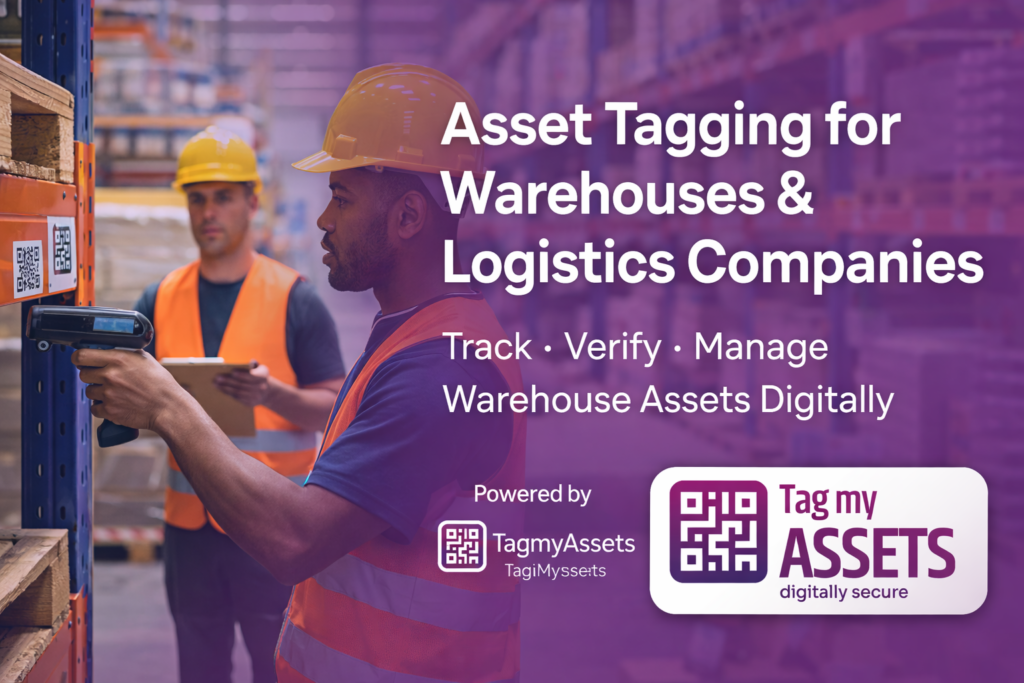
Why Warehouse Asset Tagging is Important for Logistics Companies
Warehouse asset tagging plays a critical role in improving operational efficiency and asset visibility in modern logistics operations. Warehouses and distribution centers typically handle thousands of movable assets such as forklifts, pallet jacks, scanners, racks, storage bins, and IT equipment. Without a proper identification and tracking system, managing these assets becomes extremely difficult.
Implementing warehouse asset tagging allows logistics companies to assign a unique identification code to each asset using barcode labels, QR codes, or RFID tags. These tags connect the physical asset with a digital asset register or asset management system, enabling companies to monitor assets in real time.
One of the biggest advantages of warehouse asset tagging is improved asset visibility. Warehouse managers can quickly identify where an asset is located, which department is using it, and its current operational status. This significantly reduces the time spent searching for tools and equipment inside large warehouse facilities.
Another major benefit is accurate inventory and asset control. In large logistics environments, assets frequently move between storage areas, loading docks, and operational zones. Warehouse asset tagging ensures that every asset movement can be recorded and tracked digitally, reducing the chances of asset misplacement or loss.
Warehouse asset tagging also simplifies physical verification and audit processes. During internal audits or financial audits, tagged assets can be scanned using handheld devices or mobile applications, allowing auditors to quickly verify asset existence and location. This improves the accuracy of the Fixed Asset Register (FAR) and reduces audit discrepancies.
Additionally, asset tagging helps logistics companies improve maintenance management. Tagged equipment such as forklifts, conveyor systems, and scanners can be linked to maintenance schedules, service history, and warranty information. This allows companies to plan preventive maintenance and minimize equipment downtime.
From a strategic perspective, warehouse asset tagging also supports data-driven decision making. When assets are digitally tracked, warehouse managers can analyze usage patterns, asset utilization rates, and equipment performance. This data helps companies optimize asset allocation and make better investment decisions.
In today’s fast-moving supply chain environment, warehouse asset tagging is no longer optional. It has become an essential component of modern warehouse management systems that helps logistics companies improve operational efficiency, strengthen asset control, and maintain accurate asset records.
What is Warehouse Asset Tagging?
Warehouse asset tagging is the process of assigning a unique identification tag to every physical asset in a warehouse.
Each tag contains a barcode, QR code, or RFID chip that links the asset to a central asset database or Fixed Asset Register (FAR).
When scanned using a mobile device or asset management system, the tag provides detailed information such as:
- Asset name
- Asset category
- Asset ID
- Location
- Purchase date
- Asset owner or department
- Maintenance history
- Asset condition
This creates a digital identity for every warehouse asset.
Why Asset Tagging is Important for Warehouses
Warehouses operate in a fast-moving environment where assets constantly move between locations.
Without tagging, companies often struggle with missing assets and incorrect asset records.
Key benefits of warehouse asset tagging include:
1 Improved Asset Visibility
Asset tagging allows companies to track assets in real time across warehouses and distribution centers.
2 Faster Physical Verification
Warehouse audits become much faster because assets can be scanned instead of manually recorded.
3 Reduced Asset Loss
Unique asset IDs make it easier to detect missing, stolen, or misplaced assets.
4 Better Warehouse Management
Warehouse managers can easily monitor:
- Equipment usage
- Asset movement
- Maintenance schedules
5 Accurate Fixed Asset Register
Asset tagging ensures the Fixed Asset Register matches actual physical assets.
Common Assets Tagged in Warehouses
Warehouses contain a large variety of operational assets.
Common warehouse assets that require tagging include:
Warehouse Equipment
- Forklifts
- Pallet jacks
- Conveyor belts
- Trolleys
- Loading equipment
Storage Infrastructure
- Storage racks
- Pallet racks
- Storage bins
- Shelving systems
Technology Equipment
- Barcode scanners
- Handheld devices
- Computers
- Printers
- CCTV cameras
Facility Assets
- Air conditioning units
- Fire extinguishers
- Electrical panels
- Generator sets
Logistics Assets
- Pallets
- Containers
- Transport cages
- Delivery equipment
Proper tagging ensures every asset is traceable within the warehouse system.
Types of Asset Tags Used in Warehouses
Different warehouse environments require different types of asset tags.
Barcode Asset Tags
Barcode tags are cost-effective and widely used for asset identification.
Best for:
- IT equipment
- Office assets
- Small warehouse tools
QR Code Asset Tags
QR code tags store more information and can be scanned using mobile phones or asset management apps.
Best for:
- Warehouse infrastructure
- Facility assets
- Equipment tracking
RFID Asset Tags
RFID tags allow automatic asset detection without manual scanning.
Best for:
- High-value assets
- Pallet tracking
- Container tracking
- High-volume logistics operations
Step-by-Step Warehouse Asset Tagging Implementation
Implementing asset tagging in a warehouse requires a structured approach.
Step 1 Asset Identification
Identify all assets present in the warehouse including:
- Equipment
- Infrastructure
- Technology devices
Step 2 Asset Data Collection
Capture asset information such as:
- Asset description
- Serial number
- Location
- Asset category
- Asset owner
Step 3 Tag Selection
Choose the appropriate tag type:
- Barcode
- QR code
- RFID
- Metal tags for heavy equipment
Step 4 Tag Printing
Generate unique asset IDs and print asset labels.
Each label contains a scannable code.
Step 5 Asset Tagging
Physically attach tags to assets using:
- Adhesive labels
- Rivets
- Screws
- Metal plates
Step 6 Asset Mapping
Link tagged assets to the warehouse asset database or ERP system.
Step 7 Asset Verification
Conduct physical verification to ensure every asset is tagged and recorded correctly.
Warehouse Asset Tagging and Audit Compliance
Warehouse asset tagging plays a crucial role during financial audits and asset verification exercises.
Auditors often check whether:
- Fixed Asset Register matches physical assets
- Asset locations are accurate
- Missing assets are reported
Tagged assets make it easier to:
- Perform annual asset verification
- Maintain audit trails
- Track asset movement
Warehouse asset tagging also supports compliance with internal audit and financial reporting standards.
Challenges Warehouses Face Without Asset Tagging
Many logistics companies still rely on manual asset registers or spreadsheets.
This leads to several problems:
Asset Misplacement
Equipment frequently moves between warehouses, leading to tracking issues.
Audit Discrepancies
Manual records often do not match physical assets.
Operational Delays
Employees spend time searching for tools or equipment.
Asset Duplication
Multiple asset records may exist for the same asset.
Asset tagging addresses these problems by creating a structured asset management system.
How Asset Tagging Improves Warehouse Efficiency
Asset tagging improves warehouse efficiency in multiple ways.
Faster Asset Tracking
Warehouse teams can instantly locate assets using scanning devices.
Better Maintenance Management
Tagged assets can store maintenance and service history.
Reduced Equipment Downtime
Maintenance teams can identify assets quickly and schedule repairs.
Data-Driven Decision Making
Warehouse managers can analyze asset usage patterns.
How TagMyAssets Helps Warehouses Implement Asset Tagging
At TagMyAssets, we help warehouses and logistics companies implement end-to-end asset tagging solutions.
Our services include:
- Physical verification of warehouse assets
- QR code and barcode asset tagging
- RFID asset tagging
- Asset data capture and digitization
- Fixed Asset Register reconciliation
- Cloud-based asset management dashboards
Our asset tagging solutions are designed to help companies achieve accurate asset records and faster warehouse operations.
Future of Warehouse Asset Tagging
With Industry 4.0 and smart warehouses, asset tagging is evolving rapidly.
Emerging technologies include:
- IoT asset tracking
- Real-time RFID asset monitoring
- AI-based warehouse analytics
- Mobile asset management systems
Companies adopting modern asset tagging systems gain better operational visibility and competitive advantage.
Conclusion
Warehouse asset tagging is no longer optional for logistics companies managing large inventories and operational assets.
By implementing asset tagging, organizations can:
- Improve asset visibility
- Reduce losses
- Simplify audits
- Enhance warehouse efficiency
A well-implemented asset tagging system creates a digital backbone for modern warehouse operations.
FAQ – Warehouse Asset Tagging
What is warehouse asset tagging?
Warehouse asset tagging is the process of assigning unique identification tags such as barcodes, QR codes, or RFID labels to warehouse assets for tracking and management.
Why do warehouses need asset tagging?
Asset tagging helps warehouses track equipment, reduce asset loss, improve audit accuracy, and maintain a reliable asset register.
What types of tags are used in warehouses?
Common warehouse asset tags include:
- Barcode tags
- QR code tags
- RFID tags
- Metal asset tags for heavy equipment
How does asset tagging improve warehouse operations?
Asset tagging improves operational efficiency by enabling faster asset tracking, simplified audits, and better maintenance management.
Can asset tagging integrate with warehouse management systems?
Yes. Modern asset tagging solutions can integrate with warehouse management systems (WMS), ERP systems, and asset management software.