
Airports are among the most complex infrastructure facilities in the world. From passenger terminals to runway equipment, airports operate thousands of assets that must be carefully tracked and maintained.
Managing these assets manually can lead to operational inefficiencies, misplaced equipment, and higher maintenance costs. This is where asset tagging and digital asset management systems become essential.
Modern airports are increasingly adopting QR code, barcode, and RFID-based asset tagging systems to maintain accurate records of their infrastructure and equipment.
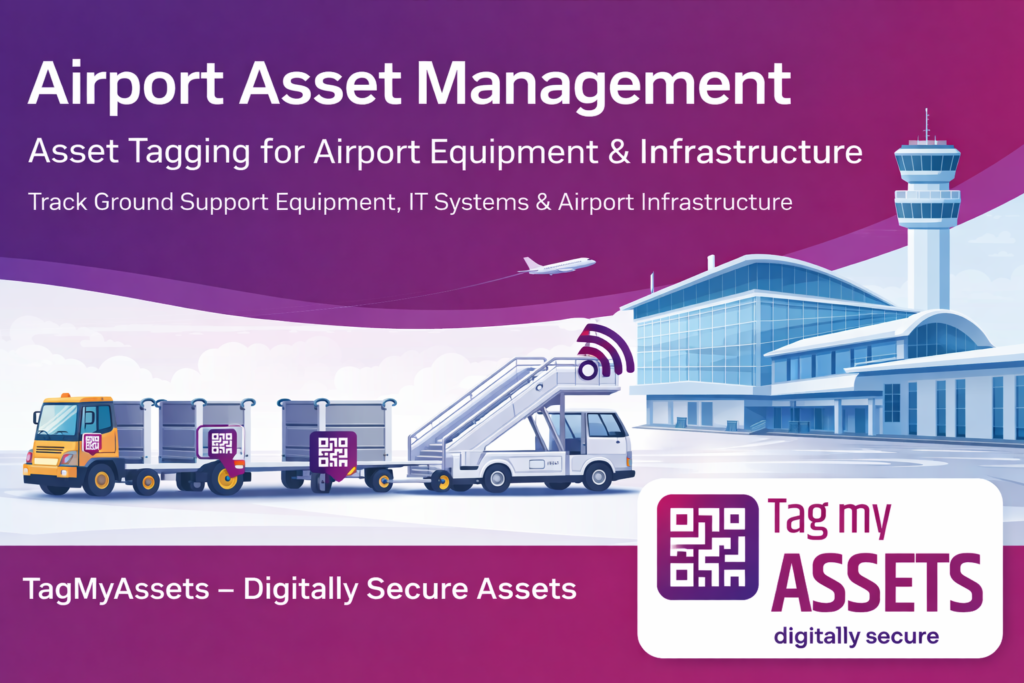
Airport asset management systems help aviation authorities track thousands of airport assets including ground support equipment, security infrastructure, and IT systems.
Why Asset Management is Critical for Airports
Airports operate 24/7 and rely on multiple categories of assets such as security systems, baggage handling equipment, IT infrastructure, and ground support vehicles.
Without proper asset tracking:
- Equipment may be misplaced or underutilized
- Maintenance schedules may be missed
- Regulatory compliance may be affected
- Operational delays may occur
A structured asset tagging system ensures visibility, accountability, and efficient asset utilization.
Types of Assets in Airports
Airports maintain a wide range of physical assets across different departments.
Ground Support Equipment
These assets operate directly on the airside and support aircraft operations.
Examples include:
- Baggage carts
- Pushback tractors
- Passenger stairs
- Ground power units
- Aircraft tow tractors
Tracking these assets helps improve operational efficiency and reduce equipment downtime.
Terminal Infrastructure
Inside airport terminals, multiple infrastructure assets must be maintained.
These include:
- Check-in counters
- Baggage handling systems
- Security screening machines
- Passenger seating
- Information kiosks
Asset tagging helps airport authorities quickly locate and maintain these assets.
IT and Communication Equipment
Modern airports rely heavily on technology infrastructure.
Examples include:
- Servers and networking equipment
- Display screens and flight information systems
- CCTV surveillance systems
- Communication systems
Tracking IT assets ensures proper lifecycle management and security.
Safety and Emergency Equipment
Airports also maintain critical safety assets such as:
- Fire extinguishers
- Emergency medical equipment
- Safety vehicles
- Rescue equipment
Regular inspection and tracking of these assets are essential for safety compliance.
Challenges in Airport Asset Management
Managing airport infrastructure comes with several challenges.
Large Operational Areas
Airports span large areas including terminals, cargo zones, hangars, and airside operations.
Locating assets manually in such large environments becomes difficult.
Multiple Stakeholders
Airports involve various stakeholders including airlines, ground handling agencies, security agencies, and maintenance teams.
Asset ownership and responsibility may overlap.
High Asset Mobility
Many airport assets such as baggage carts and ground vehicles are constantly moving.
Without tagging systems, tracking their location becomes difficult.
How Asset Tagging Helps Airports
Asset tagging provides a simple and effective solution for airport asset management.
Each asset is assigned a unique identification tag that contains a QR code, barcode, or RFID chip.
When scanned using a mobile device, the system displays detailed asset information such as:
- Asset ID
- Location
- Department
- Purchase details
- Maintenance history
This helps airport teams maintain accurate records.
Benefits of Asset Tagging in Airports
Implementing an asset tagging system provides several advantages.
Improved Asset Visibility
Airport authorities can instantly identify and locate assets across terminals and operational areas.
Faster Maintenance Tracking
Maintenance teams can quickly access service history and schedule preventive maintenance.
Reduced Asset Loss
Tagging helps prevent loss or misplacement of movable equipment.
Better Compliance and Audit Readiness
Asset records remain organized and easily accessible during regulatory audits.
How TagMyAssets Can Help Airports
TagMyAssets provides end-to-end asset tagging and verification solutions for large infrastructure environments such as airports.
Our services include:
- Physical asset verification
- QR / Barcode asset tagging
- RFID tagging for movable assets
- Mobile app based asset scanning
- Digital asset registers and reports
With our technology-driven solutions, airport operators can maintain accurate asset records and improve operational efficiency.
Conclusion
Airports rely on thousands of critical assets that support safe and efficient operations. Managing these assets manually can lead to inefficiencies and operational risks.
By implementing QR code or RFID-based asset tagging systems, airports can gain full visibility of their infrastructure and equipment.
A well-structured asset management system helps ensure better utilization, improved maintenance, and regulatory compliance.
Airport Asset Management FAQs
1. What is airport asset management?
Airport asset management is the process of tracking, monitoring, and maintaining airport infrastructure and equipment such as ground support vehicles, baggage handling systems, IT infrastructure, and safety equipment to ensure efficient airport operations.
2. Why is asset tagging important for airports?
Asset tagging helps airports uniquely identify each asset using QR codes, barcodes, or RFID tags. This allows airport authorities to track equipment locations, monitor maintenance schedules, reduce asset loss, and maintain accurate asset records.
3. What types of assets need tracking in airports?
Airports manage multiple categories of assets including ground support equipment, security systems, IT infrastructure, baggage handling equipment, passenger facilities, emergency equipment, and vehicles used for airport operations.
4. How does QR code asset tagging work in airports?
QR code asset tags are attached to each asset. When scanned using a mobile device, the system instantly displays asset details such as asset ID, location, department, purchase date, and maintenance history.
5. Can RFID be used for airport asset tracking?
Yes, RFID technology is commonly used in airports for tracking high-value movable assets like baggage carts, ground support equipment, and vehicles. RFID allows automated tracking without manual scanning.
6. How can TagMyAssets help airports manage assets?
TagMyAssets provides professional asset tagging and verification services including QR code tagging, RFID tagging, mobile scanning solutions, and digital asset registers to help airports maintain accurate asset records and improve operational efficiency.
Best Practices for Airport Asset Management
To successfully implement airport asset management systems, aviation authorities should follow structured asset tagging strategies. QR code and RFID asset tagging help track ground support equipment, security infrastructure, and IT systems across airport terminals. Proper airport asset management improves operational efficiency, asset visibility, and regulatory compliance.
