
“For companies navigating the audit cycles of 2026, understanding the current Fixed Asset Tagging Cost in India is no longer optional—it is a critical part of financial planning. Whether you are aiming for CARO 2020 compliance or cleaning up a legacy register, the Fixed Asset Tagging Cost in India can vary significantly based on your technology choice and project volume. In this guide, we break down the latest market benchmarks to help you budget accurate.
Determining the Fixed Asset Tagging Cost in India is a top priority for CFOs facing upcoming audits. In 2026, professional tagging and verification have shifted from a luxury to a compliance necessity for accurate financial reporting.
Based on real-world project data from TagMyAssets, this guide provides the most accurate 2026 pricing benchmarks and explains how professional tagging pays for itself within the first year.
Factors Influencing the Fixed Asset Tagging Cost in India
“Several variables contribute to the total Fixed Asset Tagging Cost in India for modern enterprises. While a standard QR project is affordable, choosing high-durability metal tags for heavy machinery will naturally increase the Fixed Asset Tagging Cost in India due to material resilience. Additionally, the geographical spread of your assets across multiple states can introduce travel and mobilization fees that impact the final Fixed Asset Tagging Cost in India per unit
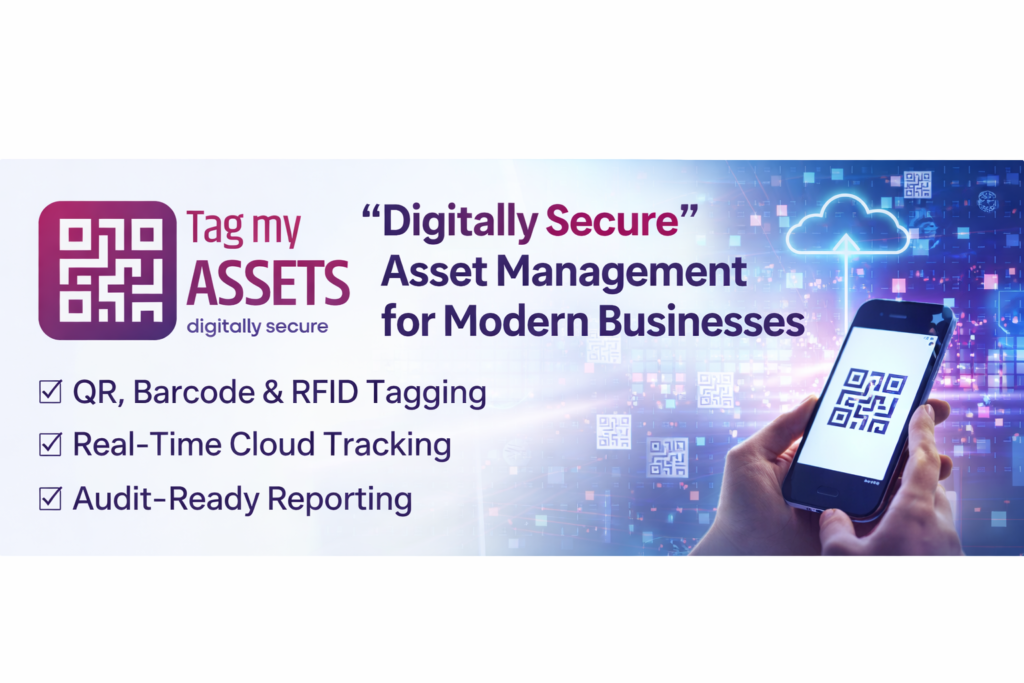
1. What is Fixed Asset Tagging & Physical Verification?
Fixed asset tagging and verification is a professional process where:
- Unique Identification: Each asset is assigned a unique QR, Barcode, or RFID tag.
- On-Site Verification: Physical existence and condition are verified on-site.
- Digital Capture: Asset details (GPS, Photos, User) are captured digitally.
- FAR Reconciliation: Your Fixed Asset Register (FAR) is matched with ground reality.
This ensures 100% audit readiness, eliminates “Ghost Assets,” and ensures accurate depreciation and insurance records.
2. Fixed Asset Tagging & Verification Cost in India (2026)
📊 Standard Benchmarks for Fixed Asset Tagging Cost in India (2026)
| Service Type | 2026 Price Range (Per Asset) |
| Physical Verification | ₹10 – ₹12 |
| QR Code / Barcode Tagging | ₹15 – ₹20 |
| RFID Tagging | ₹50 – ₹100 |
| FAR Reconciliation (One-Time Cleanup) | ₹25,000 – ₹75,000 |
| Asset Management Software (Annual) | ₹25,000 – ₹50,000 |
Export to Sheets
⚠️ Important Note on Scaling: These costs are tentative. For smaller projects (500–1,000 assets), per-unit prices are often higher because the fixed costs of transportation and mobilization remain the same. Conversely, for large-scale enterprise projects, per-unit costs decrease significantly due to bulk sourcing of RFID tags and manpower efficiency.
📌 Budgeting by Project Size
| Asset Volume | Estimated Budget (INR) |
| Up to 1,000 | ₹25,000 – ₹75,000 |
| 1,000 – 5,000 | ₹75,000 – ₹2,00,000 |
| 5,000 – 20,000 | ₹2,00,000 – ₹8,00,000 |
| 20,000+ | Custom Bulk Pricing |
Export to Sheets
3. Key Factors That Affect Pricing
- Asset Density: Verifying 1,000 laptops in one office is faster than 1,000 items spread across 50 retail outlets.
- Asset Type: IT equipment is easier to tag; heavy machinery or outdoor infrastructure requires high-durability metal tags, increasing the cost.
- FAR Data Quality: If your records are outdated, the One-Time FAR Reconciliation fee (₹25k–₹75k) is essential to match physical tags to your accounting books.
- Technology: RFID > QR > Barcode (in cost order).
4. In-House vs. Outsourced: The Cost Reality
Many companies try to save money by doing this in-house. Here is why it often fails:
- ❌ In-House (The Hidden Cost): Staff time leads to productivity loss. Manual records lead to a 15-20% error rate, resulting in audit risks and potential penalties. The hidden cost often exceeds ₹5–10 Lakh annually.
- ✅ Professional Outsourcing: With an agency like TagMyAssets, you get trained manpower, digital tools, and audit-ready reports. Outsourcing is typically 30–40% cheaper in the long run.
5. Real-World Case Study: 165% ROI
Client: Manufacturing Company in NCR Total Assets: 8,500 | Project Cost: ₹3.2 Lakh
Findings:
- 740 “Ghost Assets” identified (items on books that didn’t exist).
- 110 missing machines tracked down.
- Depreciation errors corrected.
Financial Benefit:
- Insurance Savings: ₹4.5 Lakh/year (stopped paying on ghost assets).
- Depreciation Recovery: ₹2.8 Lakh.
- Audit Penalty Avoided: ₹1.2 Lakh.
- Total Benefit: ₹8.5 Lakh in Year 1.
6. Our 5-Step Process for Compliance
- Pre-Project Planning: FAR review and location mapping.
- On-Site Verification: Physical inspection and tag pasting.
- Data Capture: Logging photos, GPS, and condition.
- Reconciliation: Floor-to-sheet and Sheet-to-floor matching.
- Final Reporting: Delivering audit-ready files and management dashboards.
Conclusion: Is it Worth the Cost?
Absolutely. Professional asset tagging and verification is not an expense—it is a financial control mechanism. It saves tax and insurance costs, reduces audit risk, and builds management confidence. Ultimately, the Fixed Asset Tagging Cost in India should be viewed as an investment in transparency and audit security. By opting for a professional verification service today, you can eliminate ghost assets and significantly reduce your long-term operational risks. If you are ready to get an exact quote tailored to your business, contact TagMyAssets to evaluate your specific Fixed Asset Tagging Cost in India for 2026
Ready to clean up your Fixed Asset Register?
Contact TagMyAssets today for a free cost assessment and a customized quote for your 2026 audit cycle.
[📍 Office Address:
A1, New Palam Vihar, Gurugram, Haryana 122017, India
📞 Phone:
+91 96500 03293
📧 Email:
connect@tagmyassets.com
🌐 Website:
https://tagmyassets.com/
FAQs on Asset Tagging Cost
Q1. Is GST applicable?
Yes, usually 18% GST is applicable.
Q2. Is pricing negotiable?
Yes, based on volume and long-term contracts.
Q3. Can projects be done overnight?
Yes, especially for retail and warehouses.
Q4. Do we need RFID always?
No. QR/Barcode is sufficient in most cases.
Q5. How often should verification be done?
Ideally every 2–3 years or before major audits.
Q6 What is the average Fixed Asset Tagging Cost in India for 2026?
Answer: In 2026, the Fixed Asset Tagging Cost in India typically ranges from ₹15 to ₹20 per asset for standard QR codes or barcodes. For more advanced RFID tagging, costs range between ₹50 and ₹100 per asset. These prices often decrease for larger projects (20,000+ assets) due to bulk discounts on materials and specialized labor.
Q7 Why is there a one-time fee for Fixed Asset Register (FAR) Reconciliation?
Answer: Most professional services in India charge a one-time fee of ₹25,000 to ₹75,000 for FAR Reconciliation. This essential step cleans up years of inconsistent data, identifies “ghost assets” (items on books but not physically present), and creates a verified baseline for all future audits.
Q8 How often should Indian companies perform physical verification of assets?
Answer: To remain compliant with the Companies Act and CARO 2020, physical verification should ideally be conducted annually or at least every 2–3 years. High-value or high-risk assets, such as specialized manufacturing machinery or IT hardware, may require more frequent cycles to prevent loss or misappropriation.
Q9 Should I use QR codes or RFID for my asset tagging project?
Answer: The choice depends on your budget and efficiency needs. QR codes are cost-effective and can be scanned using standard mobile devices, making them ideal for office assets. RFID is more expensive but allows for simultaneous scanning of hundreds of assets without a direct line of sight, which drastically reduces audit time for large warehouses or factories.
Good Reads
🔗 Fixed Asset Tagging & Verification
https://tagmyassets.com/asset-tagging-services-india/
🔗 Asset Tagging & Inventory Verification
https://tagmyassets.com/asset-tagging-inventory-verification-india/
🔗 Fixed Asset & Physical Verification Services
https://tagmyassets.com/fixed-asset-verification/
🔗 Inventory Verification Services
https://tagmyassets.com/inventory-verification/
🔗 Mobile App Based Asset Tagging System
https://tagmyassets.com/mobile-app-based-asset-tagging-system-india/
🔗 Case Studies (e.g., Sietz, Remari, Lixil)
https://tagmyassets.com/case-study/
🔗 Blog Homepage (List of Articles)
https://tagmyassets.com/blog/
Institute of Chartered Accountants of India (audit & asset verification guidance)
https://www.icai.org/
🔗 Ministry of Corporate Affairs (MCA), India — Companies Act requirements relevant to verification
https://www.mca.gov.in/
🔗 ISO Standards (especially asset/inventory related guidelines)
https://www.iso.org/standards.html
