
Implementing RFID Asset Tracking India is the most effective way for modern hospitals to eliminate equipment loss and ensure 100% audit compliance. In 2026, RFID Asset Tracking India has moved from warehouses to the heart of healthcare. With medical staff spending 20% of their time just searching for equipment, TagMyAssets provides the automated solutions needed to save time and lives. With RFID Asset Tracking in Hospitals India, healthcare facilities can manage critical medical equipment more efficiently.
RFID Asset Tracking in Indian Hospitals: Future Outlook
In the coming years, RFID asset tracking in Indian hospitals will become a standard requirement rather than an optional upgrade. With increasing patient load, regulatory compliance, and demand for operational efficiency, hospitals must adopt smart tracking systems. RFID enables predictive maintenance, faster audits, and real-time reporting, making healthcare facilities more resilient and future-ready.
1. Instant Location of Critical Devices
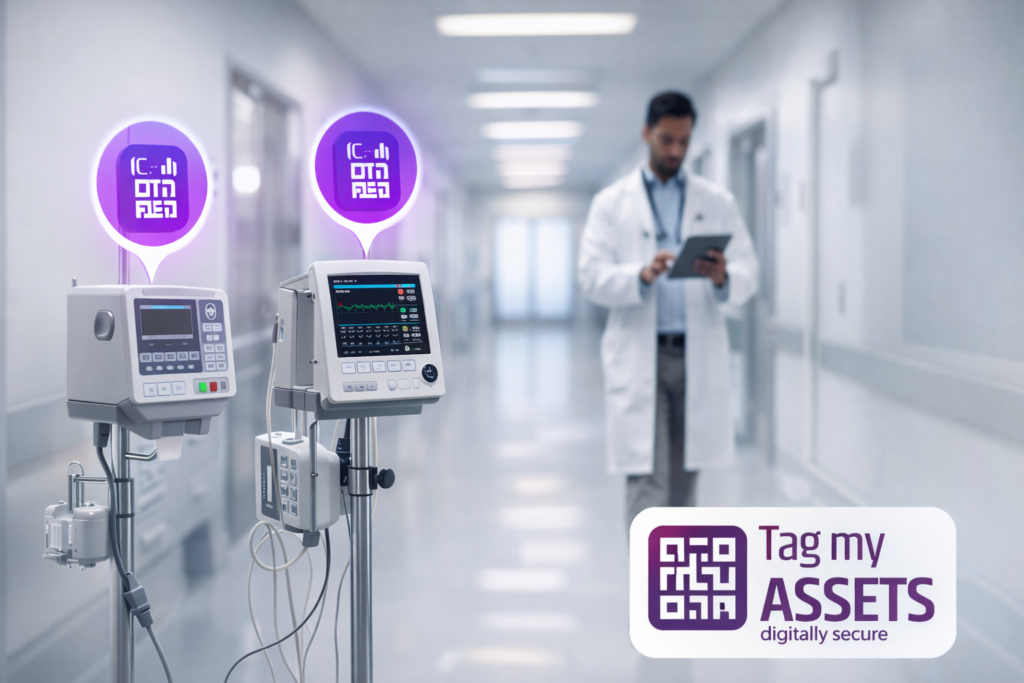
In an emergency, every second counts. RFID allows staff to instantly locate ventilators, defibrillators, and infusion pumps that often get moved between departments.
- Page 1 Tip: Mention specific equipment like “ECG carts” to rank for niche searches.
2. Preventing “Ghost Assets” and Theft
High-value assets like portable X-ray machines are prone to loss or unauthorized removal. RFID gateways at hospital exits create an automated audit trail, reducing equipment loss by 35%.
3. Automated Sterilization & Compliance
Surgical instruments require strict tracking through sterilization cycles. RFID enables real-time monitoring to ensure no instrument is misplaced or left behind after a procedure.
4. Medication Safety & Expiry Tracking
RFID technology reduces medication waste by 40% by alerting pharmacy staff before drugs expire. In India, where medication errors cost billions, this “paisa vasool” feature is a top priority for hospital owners.
5. Better Patient Flow with Smart Beds
Beds equipped with RFID tags provide live updates on occupancy and cleaning status. This helps Indian hospitals manage patient admissions faster and ensures compliance with hygiene protocols.
Free ROI Tool : Calculate Your Hospital’s Annual Savings with RFID Tracking
Stop the revenue leak in your facility. Our RFID Asset Tracking India systems ensure that expensive ventilators and infusion pumps are always where they need to be, reducing ‘Ghost Assets’ by up to 60%.
RFID ROI Calculator (₹)
Estimate your annual savings with TagMyAssets
The Conclusion:
“Ultimately, implementing RFID Asset Tracking India is a ‘Paisa Vasool’ strategy for modern hospitals. It ensures compliance, boosts staff productivity, and most importantly, improves patient outcomes through better equipment availability.
How TagMyAssets Simplifies Hospital Asset Management
We don’t just sell tags; we provide a complete ecosystem for RFID Asset Tracking India. Here is how TagMyAssets transforms your hospital operations:
- Customized Tagging Solutions: We provide rugged, medical-grade tags designed to survive sterilization and heavy use on everything from wheelchairs to ventilators.
- Real-Time Visibility: Our system integrates with your existing workflow to provide a “live map” of your equipment, reducing staff search time by up to 80%.
- Audit-Ready Reports: With one click, TagMyAssets generates 100% accurate verification reports, making Fixed Asset Tagging and Verification for financial audits completely stress-free.
- Smart Alerts: Receive instant mobile notifications if high-value equipment leaves a designated zone or if a maintenance check is due.
Frequently Asked Questions (FAQ)
1. Is RFID technology safe to use around sensitive medical equipment? Yes. Properly configured RFID systems are safe for hospital environments. According to the World Health Organization (WHO), radio frequency energy from passive RFID tags does not interfere with the health of patients or the function of life-saving medical devices.
2. How much does it cost to implement RFID in an Indian hospital? Costs vary depending on the facility size and the number of assets. For example, Bluetooth Low Energy (BLE)-based systems for hospitals can start around ₹45,000 to ₹1,50,000 per unit for high-end tracking. Passive RFID tags are more affordable, costing as little as sub-₹10 each when bought in bulk.
3. What is the difference between RFID and traditional Barcodes for hospitals? Barcodes require a “line-of-sight” scan, meaning a nurse must find and scan each item one by one. RFID does not require line-of-sight; you can scan an entire room of equipment in seconds, even if the items are inside cabinets or under beds.
4. Can RFID help in reducing medication errors? Absolutely. RFID tracking systems can reduce medication errors by up to 80%. By scanning a patient’s RFID wristband, the system instantly verifies the “five rights”: the right patient, right medication, right dose, right route, and right time.
5. How long does it take to see a Return on Investment (ROI)? Most hospitals see their ROI within 18 to 24 months. This is achieved through a 35% reduction in equipment loss, a 60% improvement in equipment utilization, and significant labor savings from eliminating manual asset searches.
https://tagmyassets.com/fixed-asset-tagging-and-verification/
https://tagmyassets.com/rfid-asset-tracking-india/
hospital asset tracking study
