
Fixed Asset Register vs Physical Verification is an important concept in asset management and audit compliance. Many organisations maintain a Fixed Asset Register (FAR), but without proper physical verification of assets, the records may not match the actual assets on the ground.
The difference between Fixed Asset Register vs Physical Verification becomes very important during audits and asset management reviews. Organisations that clearly understand Fixed Asset Register vs Physical Verification can maintain more accurate asset records.
However, many organisations assume that maintaining a Fixed Asset Register alone is sufficient. In reality, physical verification of assets is equally important to ensure that records match actual assets on the ground.
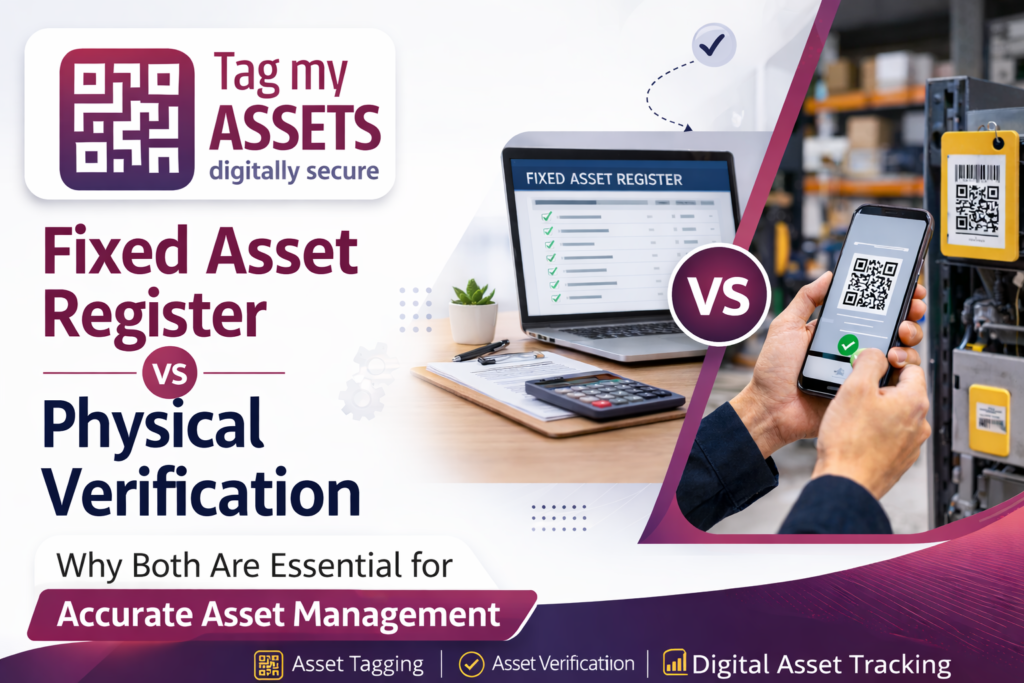
Understanding the difference between these two concepts is essential for audit compliance, asset control, and financial accuracy.
What is a Fixed Asset Register (FAR)?
A Fixed Asset Register (FAR) is a detailed record of all fixed assets owned by an organisation.
It contains important information such as:
- Asset description
- Asset category
- Asset location
- Purchase date
- Invoice number
- Asset cost
- Depreciation details
- Serial number
The FAR is usually maintained in:
- ERP systems
- Accounting software
- Excel-based asset registers
The purpose of FAR is to maintain financial and administrative records of assets.
What is Physical Verification of Assets?
Physical verification of assets refers to the process of physically locating and confirming the existence of assets recorded in the Fixed Asset Register.
During physical verification, each asset is checked on site and matched with FAR records.
The process generally includes:
- Identifying assets at different locations
- Matching asset details with FAR
- Tagging assets using QR or barcode labels
- Recording discrepancies
- Updating asset location and status
Many organisations now use mobile-based asset tagging solutions like those provided by TagMyAssets to conduct efficient asset verification.
Fixed Asset Register vs Physical Verification – Key Differences
| Aspect | Fixed Asset Register | Physical Asset Verification |
|---|---|---|
| Purpose | Maintain asset records | Confirm asset existence |
| Nature | Documentation | Physical inspection |
| Frequency | Continuous record | Periodic activity |
| Responsibility | Accounts / finance team | Audit / asset verification team |
| Outcome | Asset register | Verified asset list |
Both processes complement each other to ensure accurate asset management. Want to improve audit accuracy? Check our complete guide on
physical asset verification services in India .
Why Both FAR and Physical Verification Are Important
Maintaining FAR without verification can lead to several issues.
Common problems organisations face
- Assets recorded in FAR but not physically available
- Assets moved to different locations without updates
- Duplicate asset records
- Missing or damaged equipment
- Incorrect depreciation calculations
Physical verification helps organisations identify and correct these discrepancies.
Role of Asset Tagging in Verification
Modern organisations increasingly use QR code or RFID-based asset tagging to simplify asset tracking.
Benefits include:
- Faster asset identification
- Accurate asset location tracking
- Mobile-based scanning
- Real-time asset database updates
Companies offering fixed asset tagging services can help organisations implement structured asset management systems.
When Should Organisations Conduct Physical Verification?
Experts recommend conducting physical verification:
- Once every year for audit compliance
- During internal audits
- Before mergers or acquisitions
- After large asset purchases
- During ERP migration
Regular verification ensures that financial records accurately reflect actual assets. and audit Compliant.
Common Problems Found During Physical Asset Verification
During physical verification of fixed assets, organisations often identify several discrepancies between the Fixed Asset Register (FAR) and the actual assets available at different locations. These issues usually occur due to poor tracking systems or lack of periodic verification.
Some of the most common problems found during physical asset verification include:
1. Assets recorded in FAR but not physically available
Sometimes assets listed in the Fixed Asset Register cannot be located during verification. This may happen due to disposal, loss, or incorrect record keeping.
2. Assets moved to different locations without record updates
Assets are often transferred between departments or locations without updating the FAR, leading to incorrect asset location records.
3. Duplicate asset entries in the register
In some cases, the same asset is recorded multiple times in the register, creating confusion during audits and asset tracking.
4. Untagged or improperly tagged assets
Many organisations do not use proper asset tagging systems, making it difficult to identify and track assets during verification.
5. Assets found physically but not recorded in FAR
Sometimes assets exist physically but are missing from the Fixed Asset Register due to errors during procurement recording or system migration.
6. Damaged or obsolete assets still recorded as active
Assets that are no longer in working condition or have become obsolete may still appear as active assets in the register.
Regular physical verification of assets combined with proper asset tagging systems can help organisations identify and correct these discrepancies, ensuring accurate asset records and better audit compliance.
How TagMyAssets Helps Organisations
TagMyAssets provides specialised services for:
- Fixed asset tagging
- Asset physical verification
- QR code asset tracking
- Digital asset registers
By combining technology and on-site verification, organisations can achieve accurate asset records and improved asset control.
Why Companies Must Understand Fixed Asset Register vs Physical Verification
For effective asset management and financial accuracy, organisations must clearly understand the difference between Fixed Asset Register vs Physical Verification. While a Fixed Asset Register (FAR) maintains the financial and administrative records of assets, physical verification ensures that these assets actually exist and are located at the correct place.
Many organisations rely only on accounting records without conducting regular physical verification of assets. This can lead to several issues such as missing assets, incorrect asset locations, duplicate records, or assets that are no longer in working condition but still appear in the register.
Understanding Fixed Asset Register vs Physical Verification helps companies maintain accurate asset records, improve internal control systems, and ensure better compliance with audit requirements. Regular verification combined with proper asset tagging allows organisations to track assets more efficiently and minimise discrepancies between records and actual assets.
By implementing both Fixed Asset Register maintenance and periodic physical verification, companies can achieve better asset visibility, stronger financial control, and more reliable asset management processes.
Conclusion
Both Fixed Asset Register and Physical Asset Verification play a crucial role in asset management. Understanding the difference between Fixed Asset Register vs Physical Verification helps organisations maintain accurate asset records and ensures better audit compliance.
While the FAR maintains detailed asset records, physical verification ensures that those records accurately reflect reality. Organisations that combine both processes with modern asset tagging technologies can significantly improve asset visibility, audit compliance, and operational efficiency.
FAQ
What is the purpose of a Fixed Asset Register?
A Fixed Asset Register maintains detailed records of assets including cost, location, purchase date, and depreciation.
Why is physical verification of assets required?
Physical verification ensures that assets recorded in the FAR actually exist and are located at the correct place.
How often should asset verification be conducted?
Most organisations conduct asset verification once a year to comply with audit and financial reporting requirements.
What is asset tagging?
Asset tagging involves attaching QR codes, barcodes, or RFID tags to assets for easier identification and tracking.